50 Questions to Ask Parents About Their Child to Actually Get to Know the Kid
Most people ask parents about their child's age, grade, and allergies. These 50 questions go deeper, into personality, fears, friendships, and the details that reveal who a kid actually is. For teachers, caregivers, family members, and parents themselves.

Keepsake Team
Editorial
You meet a child for the first time. Maybe you're their new teacher. Maybe you're dating their parent. Maybe you're the grandparent who lives three states away and sees them twice a year.
So you ask the parent about them. And the parent tells you their age, their grade, their allergies, what time they go to bed. You now have a file on this kid. You don't actually know them.
The gap between knowing about a child and knowing a child is enormous. And it comes down to the questions we think to ask. Most people default to logistics because logistics feel safe and useful. But a list of questions to ask parents about their child should go further than that: into personality, fears, friendships, and the small details that reveal who a kid actually is as a person.
This article has 50 of those questions. Some are designed for teachers and childcare providers meeting a child for the first time. Some are for family members who want a real connection. And some are for parents themselves, because here's the thing most people won't say out loud: plenty of parents don't know their child as well as they think.
Why Nobody Asks Parents the Right Questions About Their Child
Think about the last time someone asked you about your child, or the last time you asked a parent about theirs. The conversation probably sounded something like: How old are they? What grade? Do they play sports? Are they a good student?
These questions produce labels, not understanding. A child is not their grade level or their extracurricular activities. But these are the questions we've normalised because they're easy to ask and easy to answer. They don't require vulnerability from either side.
When someone says "tell me about your child," most parents start with age and logistics. Not because they're shallow, but because nobody has shown them what a better question looks like. "What does your child worry about when nobody's watching?" requires a parent to have noticed. "What makes your kid laugh until they can't breathe?" requires a parent to have paid that kind of attention.
The reason most conversations about children stay surface-level isn't a lack of caring. It's a lack of prompting. Nobody taught us to ask parents about their children in ways that actually reveal who the child is. So we default to what's comfortable, and we miss the kid entirely.
Open-Ended Questions to Ask Parents About Their Kid
Closed questions get closed answers. "Is your child shy?" gives you a yes or no. "What does your child do when they walk into a room full of strangers?" gives you a story. Every question below is open-ended, designed to get a parent talking rather than just confirming or denying.
Use them in whatever context fits: getting to know a friend's child, preparing for a new babysitting job, or sitting across from a parent at a conference. Adapt the language to the child's age. And don't try to ask all of them at once. Pick three or four that feel right for the moment.
Questions About Their Child's Personality
- How would you describe your child's personality to someone who's never met them?
- What's something about your child that surprises people who don't know them well?
- What does your child get excited about in a way that's completely their own?
- How does your child handle disappointment or frustration?
- What's a preference your child has that's different from the rest of your family?
- Is there something your child is naturally good at that nobody taught them?
- What kind of environment does your child feel most comfortable in?
- How does your child show affection to the people they love?
These questions reveal temperament, not resume items. A child's personality shows up in the gap between what adults expect and what the child actually does. Listen for the specifics: not "she's creative" but "she spends an hour arranging her stuffed animals in order of who would survive a zombie apocalypse." The details are where the real kid lives.
Questions About Friendships and Communication
- Who is your child's closest friend, and what makes that friendship work?
- How does your child usually communicate when something is bothering them?
- Does your child tend to lead, follow, or do their own thing in a group?
- What kind of kid does your child have trouble getting along with?
- How does your child act when they feel left out?
- Is there anything your child finds hard to talk about?
The way a child navigates friendships tells you more about them than any test score. Pay attention to how the parent describes their child's social world. Do they talk about it with curiosity, or mostly with concern? Both reveal something about the child, and something about the parent.
Questions About What Engages Them
- What could your child spend hours doing without getting bored?
- What topics does your child bring up on their own, without being prompted?
- How does your child learn best: by watching, doing, or talking it through?
- What's a recent thing your child figured out on their own that made them proud?
- Is there something your child used to love but has recently outgrown?
- What kind of play does your child choose when nobody's directing them?
Engagement isn't about attention span. It's about what a child chooses when the choice is theirs. A kid who "can't focus" in a structured setting might spend forty minutes building something intricate at home. The question isn't whether they can engage. It's what pulls them in. That curiosity is the truest thing about them.
Questions to Ask Parents of Toddlers and Preschoolers
Young kids can't always articulate who they are in words, so the parent becomes the interpreter. But even with toddlers and preschoolers, the questions should reach beyond "are they potty trained?" and "do they nap?"
- What does your toddler do when they meet someone new?
- What comforts your child when they're upset?
- How does your preschooler handle transitions between activities?
- What are your child's biggest fears right now?
- What words or phrases does your child use that are uniquely theirs?
- How does your child take to new foods, places, or experiences?
- What makes your preschooler laugh the hardest?
- Is there a routine or ritual that's really important to your child right now?
- What does your toddler's pretend play usually look like?
- How does your child let you know when they need space?
With young kids, the answers change fast. The child who was terrified of the bath at eighteen months might be splashing for an hour at two. These questions capture a snapshot, not a permanent portrait. That's part of what makes them worth asking more than once.
What Childcare Providers Should Ask Parents About Their Children
If you're a childcare provider, teacher, or educator starting with a new child, the intake form gives you allergies and emergency contacts. It doesn't give you the child. These questions help you prepare for the actual kid who's about to walk through your door.
- Is there anything about your child that you think would be helpful for me to know?
- What's the best way to comfort your child if they get upset in the classroom?
- Are there any behavioral issues or sensitivities we should be aware of?
- How does your child respond to correction or feedback from adults?
- Does your child have any fears or anxieties that come up in group settings?
- What approach does your child take to learning new things?
- Is there anything happening in your child's day-to-day life right now that might affect how they show up here?
- What does positive engagement look like for your child?
- Are there any concerns or questions you have about how your child will adjust?
- Is there anything else you can tell me that would help me understand your child better?
A survey or intake form can capture the basics. But the best providers go further: they ask parents or guardians questions that build a better understanding of every child as a person, not just a name on a roster. These conversations take ten minutes and save weeks of guessing.
If you work in preschool or kindergarten, you already know that every child arrives with an invisible manual. The parent is the one who's read it. Your job is to ask the right questions so they can share what the curriculum and paperwork don't cover.
Questions Every Parent Should Be Able to Answer About Their Own Kid
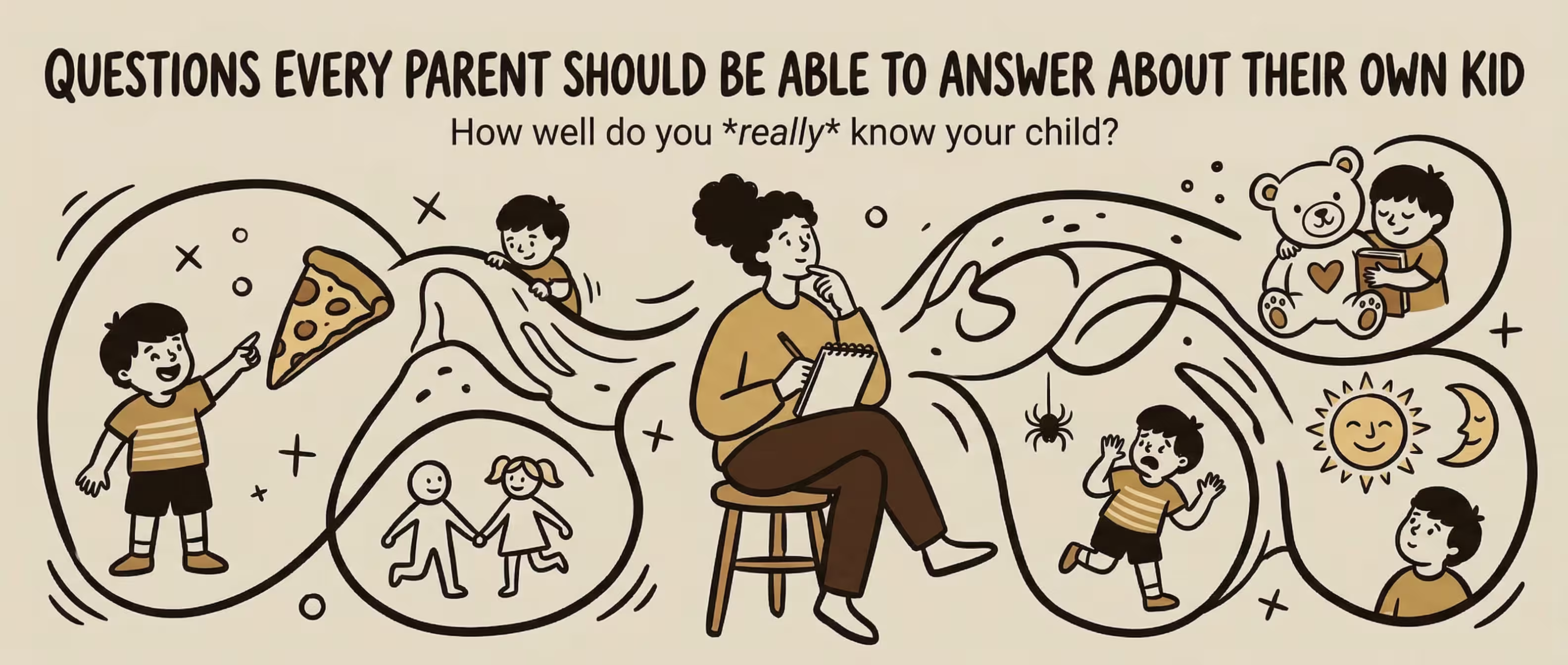
Here's where this list turns inward.
If you're a parent reading this, you might have come here looking for questions to ask someone else. But try turning these on yourself. Could you answer them about your own kid?
- What is your child afraid of that they haven't told you directly?
- What does your child think you don't understand about them?
- If your child could change one thing about your family, what would it be?
- What is your child's greatest strength, and do they know you see it?
- What does your child do when they think nobody is watching?
- What does your kid need from you that they've stopped asking for?
These questions are uncomfortable because they require honesty. Not "my child is wonderful" honesty. Real honesty. The kind where you admit that your kid has been trying to tell you something and you haven't been listening. Or that you've been so focused on parenting logistics that you've lost track of who your child is becoming.
These aren't just nice conversations to have. They're how you stay connected to your child's mental health, not just their schedule.
Getting to Know Your Child as Their Own Person
Children start as extensions of their parents. That's natural and necessary. But somewhere around age six or seven, a child begins becoming someone distinct. They develop opinions, preferences, and an inner life that has nothing to do with you. A lot of parents find this disorienting. Some resist it. And the ones who resist it hardest are often the ones whose kids stop talking to them at eighteen.
Getting to know your child as their own person means asking questions you genuinely don't know the answer to. Not "what do you want for dinner?" but "what do you think about when you can't fall asleep?" It means treating your kid's perspective as real and worth hearing, even when it's inconvenient or doesn't match your expectations.
This isn't about becoming your child's best friend. It's about building a relationship with enough depth to survive the teenage years and carry into adulthood. The parents who maintain strong, positive relationships with their grown children are almost always the ones who approached them with genuine curiosity early on.
- What do you think your child's life will look like in ten years?
- What part of your child's personality do you find hardest to understand?
- What's something your child has taught you about yourself?
- What do you want your child to remember about this time in their life?
How to Ask These Questions Without Making It an Interrogation
A list of fifty questions is useless if you fire them off like a job interview. This isn't a survey. Here's how to actually use them.
Pick one or two. Not ten. Not five. One or two that feel right for the moment. If you're a provider meeting a parent for the first time, start with "What would be helpful for me to know about your child?" and let the conversation unfold from there. If you're a parent trying to know your kid better, ask one question at dinner and actually listen to the answer.
Ask at low-pressure moments. Car rides. Walks. While cooking. The worst time to ask a meaningful question is when it feels like A Meaningful Question. The best time is when there's something else happening and the conversation can breathe.
Don't correct the answer. If a parent tells you their child struggles with something, don't immediately offer solutions. If your child tells you something that surprises you, don't react with judgment. The goal is to get the conversation going, not to fix anything. Communicate interest, not evaluation. The moment someone feels judged for their answer, the honesty stops.
Follow up later. Mention something they said last week. Ask how the thing they were worried about turned out. This signals that you were actually listening, and it builds the kind of trust that makes people want to share more. Real engagement happens across conversations, not within a single one.
If you want a deeper guide on how to ask good questions that open people up rather than shut them down, we wrote a full article on that too. The same principles apply whether you're talking to a parent, a grandparent, or a child directly.
Why These Answers Are Worth Writing Down
Here's what nobody tells you about asking good questions: the answers change.
The child who was terrified of dogs at four is begging for a puppy at seven. The kid whose best friend was Sophia now hasn't spoken to Sophia in months. The preschooler who wanted to be a firefighter now wants to be a marine biologist. Or an architect. Or nothing yet.
These shifts happen so gradually that parents often can't remember the earlier versions. What did your child's voice sound like at three? What made them laugh at five? What were they afraid of at eight? The details that feel permanent in the moment are the first to fade.
Writing down the answers creates a record of who your child was at each stage. Not a report card. Not a developmental milestone chart. A portrait of a small, evolving person as seen through the eyes of the people that know them best.
A Keepsake biography project gives you a place to collect those answers over time. You can capture what your child says in their own words, write alongside them as they get older, and eventually turn the whole thing into a printed book they'll actually want to read someday. It's a way to strengthen the bond between parent and child by showing your kid, years from now, that you paid attention. That you asked. That you cared enough to write it down.
Because the questions on this list aren't just about understanding a child today. They're about preserving a reflection of who that child was, at this specific moment, before they become someone new.
Questions to Ask Your Daughter
20 conversation starters to connect with your daughter on a deeper level.
Questions to Ask Your Mom
The questions most people never think to ask their mother, before it's too late.
72 Interview Questions for Life Stories
A complete question bank for capturing someone's life story in their own words.


