The Art of Asking Better Questions That Get Real Answers
Most questions get forgettable answers because they're too broad, too safe, or too generic. This guide breaks down what makes a question actually work, from the thinking behind it to the silence after it.

Keepsake Team
Editorial
You already know the basics. Ask open-ended questions. Listen actively. Don't interrupt. Every communication guide on the internet covers this, and none of it explains why your dad still answers "How was your childhood?" with "Fine."
The problem isn't your technique. It's your question. Most of us default to broad, safe prompts because we haven't done the harder work of figuring out what we actually want to ask. We ask "What was school like?" when what we really want to understand is whether our mother ever felt like she didn't belong there. We ask "Any regrets?" when we're actually curious about one specific choice we watched someone make twenty years ago.
The art of asking better questions isn't about memorizing a formula. It's about learning to notice what you're genuinely curious about, and finding the courage to ask it directly. Mastering the art of asking starts with thinking before you speak.
What Separates Great Questions from Forgettable Ones
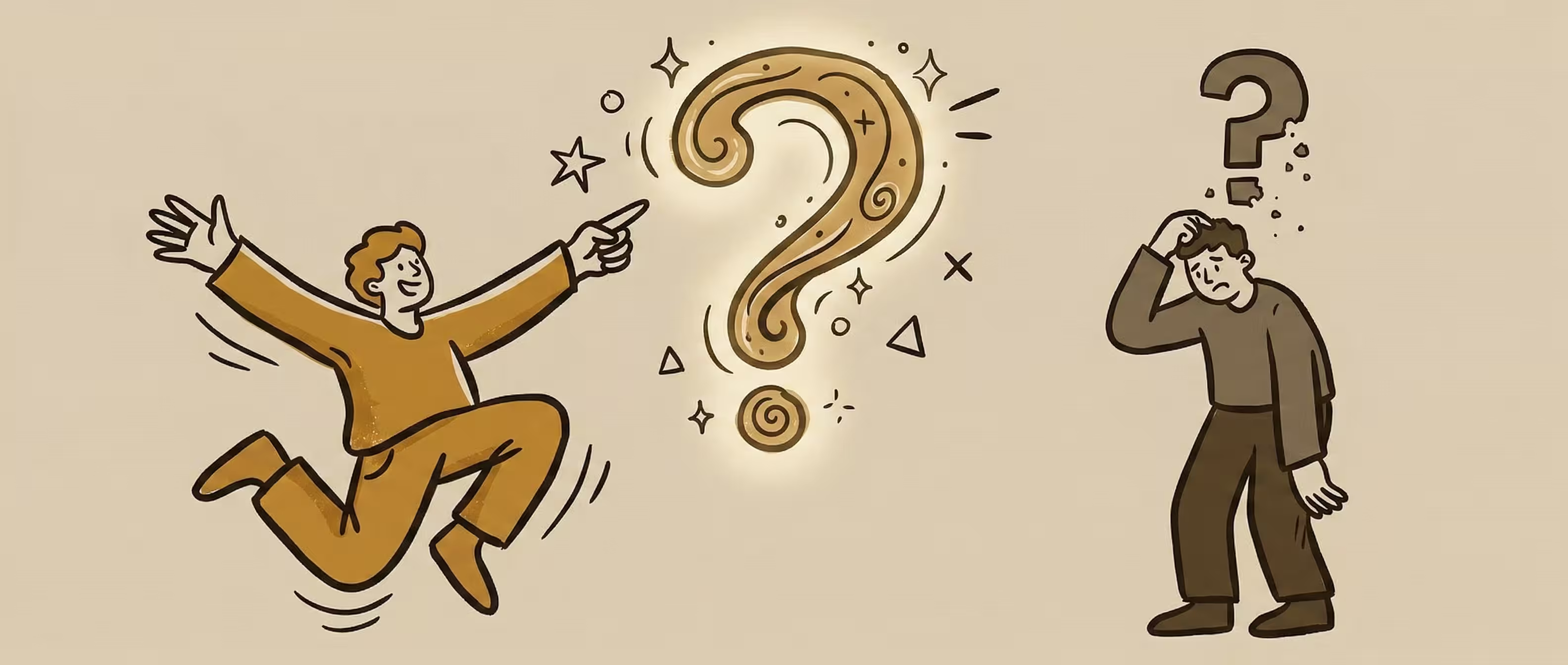
Think about the last conversation that surprised you. Chances are, someone asked you something you didn't expect. Not a shocking question, just one that was precise enough to bypass your rehearsed answers.
Great questions share a few qualities. They target a specific moment rather than a general theme. They contain a sensory detail or a concrete reference point. And they come from genuine curiosity, not obligation. Thoughtful questions like these do something that generic ones can't: they elicit stories instead of summaries.
Compare these two:
"Tell me about your wedding day."
"What were you thinking about during the drive to the ceremony?"
The first one triggers a highlight reel. The second pulls someone into a moment they haven't thought about in years. That specificity is what separates a question that gets a real answer from one that gets a polite summary. The questions you ask shape the answers you receive, and specific questions consistently unlock richer stories than vague ones.
This matters everywhere: job interviews, first dates, family dinners, research conversations, even a book club where a single sharp question can rescue an evening from polite agreement. Questions are central to every meaningful exchange, and the ones that produce the most interesting answers are almost always the ones that zoom into a specific scene instead of hovering above the topic.
Better Questions Start Before You Open Your Mouth
Here's what most advice about asking better questions misses entirely: the quality of a question depends on the thinking you do before you ask it.
Technique is the easy part. The hard part is sitting with what you don't know about someone and getting specific about the gaps. Not "I don't know much about their past" but "I've never heard them talk about the years between leaving home and meeting my other parent. What happened there?" The ability to ask better questions comes from this kind of preparation, not from studying questioning strategies.
This doesn't require a spreadsheet or a series of questions mapped out in advance. It requires paying attention. What stories does this person tell repeatedly? Those are comfortable territory. What periods do they skip over? What names come up once and never again? The most revealing questions live in those silences.
Before your next meaningful conversation, try spending five minutes thinking about what you don't know. Not what you should ask. What you genuinely want to understand. The distinction matters. "Should ask" produces dutiful questions. "Want to understand" produces questions that spark real stories, the kind that make someone stop, think, and say "Nobody's ever asked me that before."
Even slightly better questions can lead to dramatically better results. You don't need to overhaul how you communicate overnight. You just need to pause before you speak and ask yourself: what am I actually curious about here?
Open-Ended Questions vs. Closed-Ended Questions
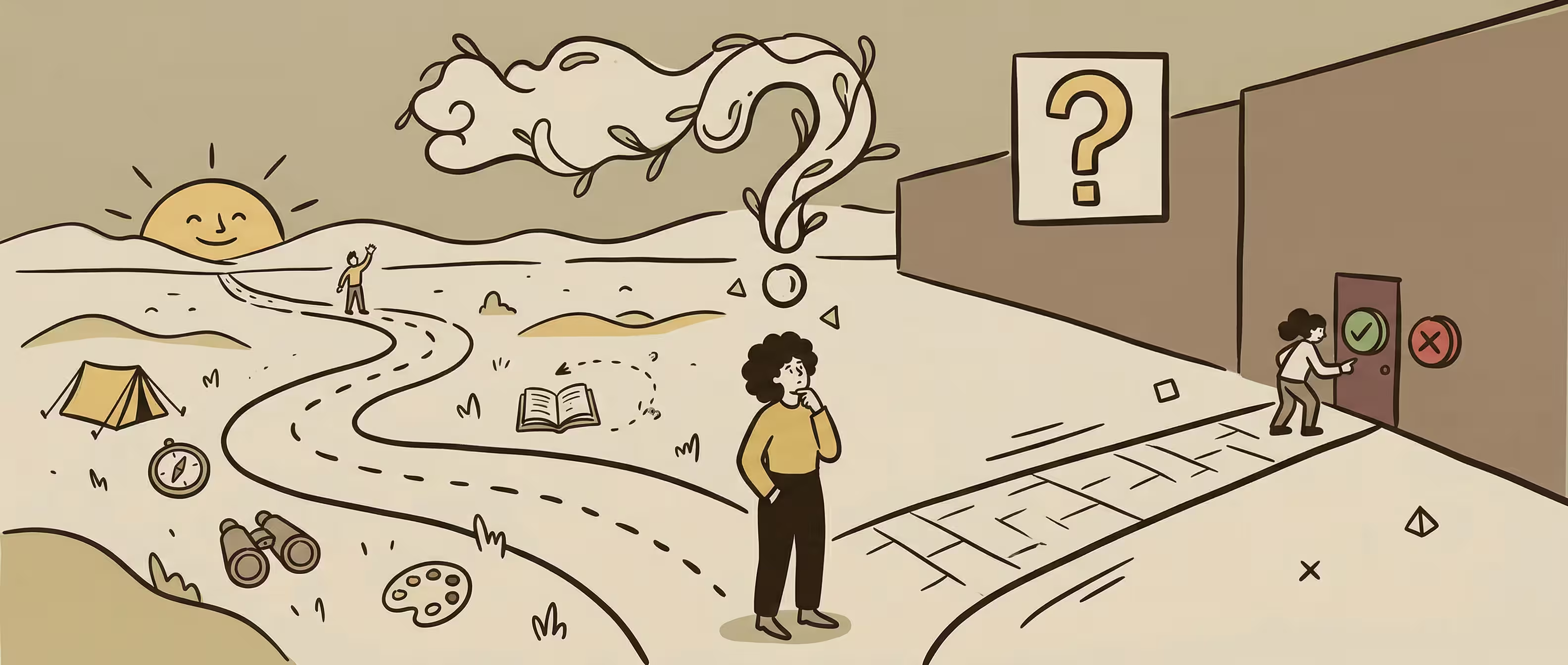
You've heard this distinction before, but it's worth revisiting because most people misapply it. Understanding each type of question is fundamental to the art of asking questions that get real answers.
Closed-ended questions have a fixed set of answers: yes, no, a date, a number. They deal in matters of fact or matters of preference and leave little room to explore. "Did you like growing up there?" is closed. The answer is yes or no, and either way, the conversation stalls.
Open-ended questions invite elaboration. "What did your neighbourhood sound like on a Saturday morning?" is open. There's no right answer, so the person has to actually think, and thinking produces stories. Questions that begin with "what," "how," or "tell me about" tend to open doors that yes-or-no questions keep shut.
But here's where the standard advice falls short. Not all open-ended questions are good. "Tell me about yourself" is technically an open-ended question, and it's also the most paralysing prompt you can give someone. It's too broad. There's no foothold, no starting point, no direction. The person doesn't know what you're asking for, so they give you a resume.
How to Ask Open-Ended Questions That Spark Real Stories
The trick is to ask open-ended questions with a narrow scope. Give people a window to look through, not an open field to wander.
"What was dinnertime like when you were ten?" is narrow enough to recall but open enough to go anywhere. It might lead to a story about a family ritual, or a fight, or a meal someone cooked every Thursday that nobody cooks anymore. The specificity of the question gives the person you're asking permission to be specific in return.
Sensory prompts work particularly well. "What could you smell when you walked through the front door?" bypasses the analytical brain and drops someone into a memory. Sounds, textures, temperatures, tastes. These are the kind of question that unlocks stories abstract prompts never reach. Questions that stimulate the senses produce answers that feel lived-in rather than rehearsed.
When you catch yourself about to ask something broad, try adding a time, a place, or a sense. "What was your first job?" becomes "What did the building smell like at your first job?" One gets a title and a company name. The other gets a story. Thought-provoking questions almost always contain this sort of concrete detail.
How to Ask Better Questions About the People You Love
The people closest to us are often the ones we question least. We assume we know them. We've heard their stories. But most of us are operating on a surprisingly thin version of the people we love most.
Your mother has a life before you that you've probably never explored in detail. Your brother has interior experiences of events you both lived through that might look nothing like yours. Your best friend has a version of their twenties that they've never told anyone, because nobody thought to ask a question about it.
Asking better questions of the people you love isn't about conducting an interview. It's about noticing that you've been in a relationship with someone for years or decades and there are entire chapters of their life you've never opened. That realisation is where the best questions come from, and it's a deeper understanding than any technique can give you.
If you're giving someone a Keepsake biography project, the questions built into the platform are designed to reach these deeper layers. But the questions that will mean the most are the ones you write yourself, the ones that come from your specific curiosity about this specific person. "You always hum when you're cooking. Where did that start?" That's a better question than any template can generate, because it comes from actually knowing someone. Asking questions like these is what turns a prompted project into something genuinely personal.
Ask One Question at a Time
When we get curious, the instinct is to pile on. "What was it like moving to a new city? Were you scared? Did you know anyone? How did you find your apartment?" That's four questions. The person you are speaking to will answer the easiest one and forget the rest.
Ask one question at a time. Let it land. Let the person sit with it. If the answer is short, that's fine. Resist the urge to fill the pause with another question. The follow-up questions should come from what they said, not from your pre-loaded list.
This is harder than it sounds. Most of us are uncomfortable with conversational gaps, and we use questions to fill them. But the best answers often come after a pause, after the easy response has been given and the person starts reaching for something deeper.
Get Comfortable with Silence
Silence after a question isn't failure. It's processing.
When you ask someone something they haven't thought about in years, they need a moment. Maybe several moments. The instinct to rescue them with a rephrased question or a lighter topic is strong, but it cuts off exactly the kind of reflection you were trying to create.
Get comfortable with silence. Count to ten in your head if you have to. Watch for the shift: the moment someone's expression changes from "searching for the right answer" to "remembering something real." That's when the actual story begins.
If someone truly doesn't want to answer, they'll tell you. Most of the time, though, silence means they're going somewhere they haven't visited in a while. Let them get there.
The Question-Asking Habit That Changes Every Conversation
Asking great questions isn't a skill you deploy in special moments. It's a habit, a way of paying attention that becomes second nature once you start practising it.
The core habit is simple: notice what you don't know. Not in an anxious, completionist way. Just a gentle awareness that the people around you contain depths you haven't explored. Your colleague mentions they grew up on a farm. You register that. Next time there's a natural opening, you ask about it. Not because you're performing curiosity, but because you actually want to know.
This question-asking habit compounds over time. As you learn more about someone, your questions get better because they build on what you already know. First conversations are generic by necessity. But the fifth conversation, the twentieth, the hundredth: those should be richer, more specific, more surprising. If your questions to someone you've known for ten years sound the same as they would to a stranger, you're not paying attention to who they actually are.
There's no shame in asking dumb questions, either. A clumsy question rooted in genuine curiosity will always get a better answer than a polished question rooted in obligation. People can tell the difference. They respond to the intent behind the question, not its construction. The skill of asking well is really just the skill of caring enough to try.
Start small. One genuine question per conversation. Not a clever question. Not a deep question. Just one that comes from something you actually noticed and want to understand. The habit builds from there.
How to Ask Great Questions When You Don't Know Where to Start
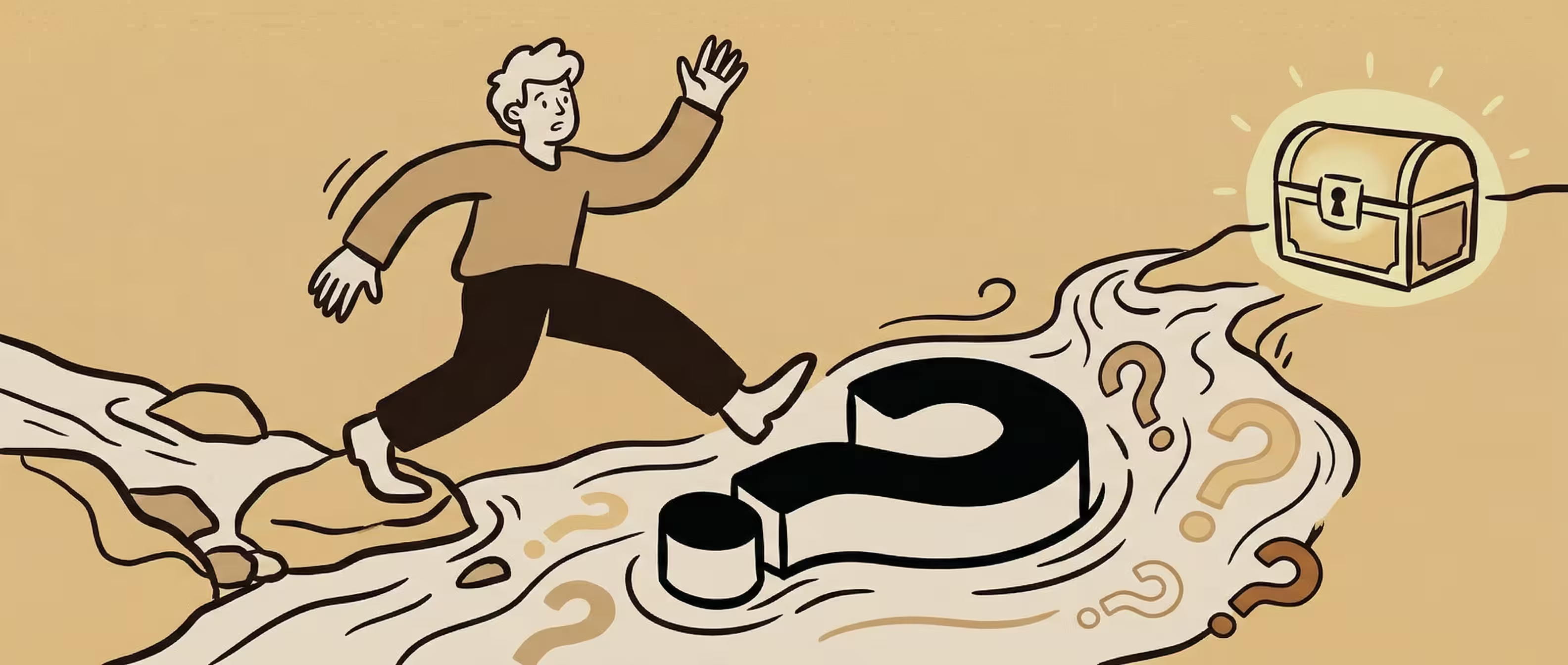
Sometimes you want to ask something meaningful, but you genuinely don't know where to begin. Maybe you're starting a memoir project for a parent and realise you don't know how to ask the right question about their past. Maybe you're sitting across from someone at a family gathering and the silence feels permanent.
When you know you want to ask a good question but can't find the words, try one of these starting points. Categorise your questions according to what you're trying to reach:
The transition question. Ask about a moment when everything changed. "What was the hardest decision you made in your twenties?" or "When did you first feel like an adult?" Transitions force people to reflect on before-and-after, which naturally produces stories. Teachers often encourage students to explore turning points for exactly this reason: transitions reveal what matters to someone.
The sensory question. Target a specific sense and a specific time. "What did your grandmother's kitchen smell like?" or "What song was playing the night you met?" Senses bypass the analytical brain and drop someone into lived experience. These questions may seem simple, but they consistently get the answers that longer, more complex questions miss.
The gap question. Ask about something you've never heard them mention. "You never talk about high school. What was that like for you?" This takes courage, but the person you're speaking with will often be relieved someone finally asked. Questions like these helped one Keepsake user fill an entire chapter with stories their father had never shared.
The reversal question. Flip the expected direction. Instead of "What are you proud of?" try "What's something you thought would matter more than it did?" Instead of "What's your happiest memory?" try "What's a small moment that stuck with you for no obvious reason?" If you know how to ask the right question, sometimes it's the one that approaches the topic from the opposite direction.
Platforms like Keepsake build entire question libraries around these principles: hundreds of prompts organised by relationship and theme to help you ask a good question even when you're drawing a blank. They're a strong starting point. But the questions that will mean the most are the ones that could only come from you, because they're rooted in what you've noticed about this person's life. So think of them not as a script, but as a way to develop your own approach to deeper conversations with the people who matter.
From Effective Questions to Lasting Stories
There's a reason this matters beyond just having better conversations.
Every family has stories that exist in only one person's memory. Your grandfather's account of emigrating. Your mother's version of the year everything fell apart. Your brother's experience of an event you both lived through but never discussed. These stories don't survive on their own. They need someone to ask for them, and questions are good for exactly this: bridging the gap between a private memory and a shared story.
Effective questions are the bridge between what lives in someone's head and what gets preserved. This is the principle behind structured life story interviews: you don't wait for stories to emerge naturally, because most of the important ones won't. You ask for them specifically, and you capture the answers while you can. The art of asking is, in the end, an act of preservation.
The stakes are real. We lose roughly 30 million people worldwide every year. Each one takes a library of stories with them. You don't need to interview everyone you know. But the people whose stories matter to you, the ones you'd regret never hearing: those are worth a few good questions.
You don't need to be a journalist or a therapist to ask a good question that changes a conversation. You just need to care enough to think about what you want to know, be specific enough to ask for it, and be patient enough to wait for the answer.
Start with one person. One question. See what happens.


