Life Timeline Template: Map Your Important Events and Life Stories
A practical guide to creating your own life timeline. Learn what events to include, how to organize them by decade, and which tools turn a list of dates into a story worth sharing.

Keepsake Team
Editorial
Your life is a collection of events, decisions, and turning points that build on each other in ways you don't always notice. A life timeline lays them out chronologically so the connections become visible. Whether you're preparing to write a memoir, reflecting on personal growth, or creating something to share with family, starting with a timeline gives your life events structure and sequence.
This guide walks you through creating your own life timeline: what to include, how to organize it, and which tools make the process easier.
Why Create a Life Timeline?
A life timeline is more than a list of dates. It's a visual representation of your history of life, a roadmap that connects the major milestones and experiences that made you who you are.
When you lay out your past experiences across a timeline, patterns emerge. You might realize every major career shift followed a period of restlessness, or that your best years came right after your hardest ones. A detailed timeline turns scattered memories into something you can study, share, and build on. It provides the building blocks of your narrative before you write a single sentence.
For anyone working on a memoir or autobiography, a timeline is the essential first step. Instead of staring at a blank page, you start with structure.
The concept of a timeline of life extends well beyond personal history. Scientists map the development of life across earth's history and the evolution of life on earth, from the formation of the earth through the precambrian's archean and proterozoic eons, the cambrian explosion, the paleozoic era's first fish, sharks, and amphibians, land plants and ferns in ancient reef ecosystems, the mesozoic's reptiles, pterosaurs, ammonites, and ammonoids, mass extinction events like the permian extinction that reshaped every genome and ecosystem, to the cenozoic's flowering plants, diverse flora, and the quaternary world shaped by shifting sea levels. The fossil record and the skeleton of geologic time across the phanerozoic eon tell the origin and early evolution of living things across the cosmos, spanning million years ago to now. Understanding evolution at that scale puts your life in context.
But your personal timeline is the one your family will actually want to read.
Creating a Detailed Timeline of Your Life
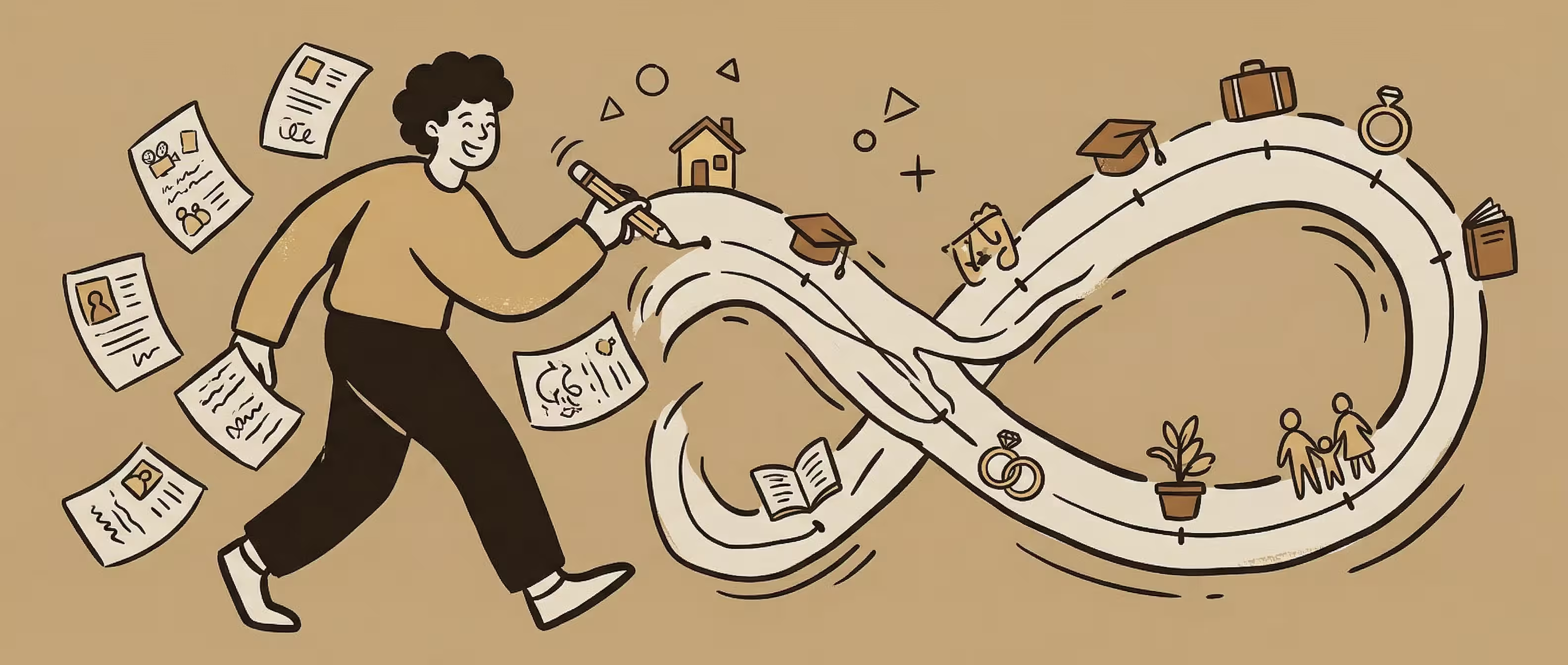
Start by gathering raw material. Pull out photo albums, old journals, school records, anything with specific dates attached. Don't worry about organization yet. Just collect.
Next, create a simple list of dates and events. Write down everything you remember: births, graduations, first jobs, relocations, relationships, losses. Include the quiet moments too. The afternoon you decided to change careers might matter more than the degree you earned ten years before it.
Once you have your list, arrange everything chronologically. Group events by specific period (childhood, university years, early career) and look for clusters. Most lives aren't evenly paced. You'll likely find long stretches where not much shifted and compressed years where everything did.
A visual timeline helps here. Whether it's a hand-drawn line on paper or a digital tool, seeing your life mapped out spatially reveals connections a simple list of dates can miss. Try adding visual cues like color coding for different life areas: career in blue, relationships in green, major events in red.
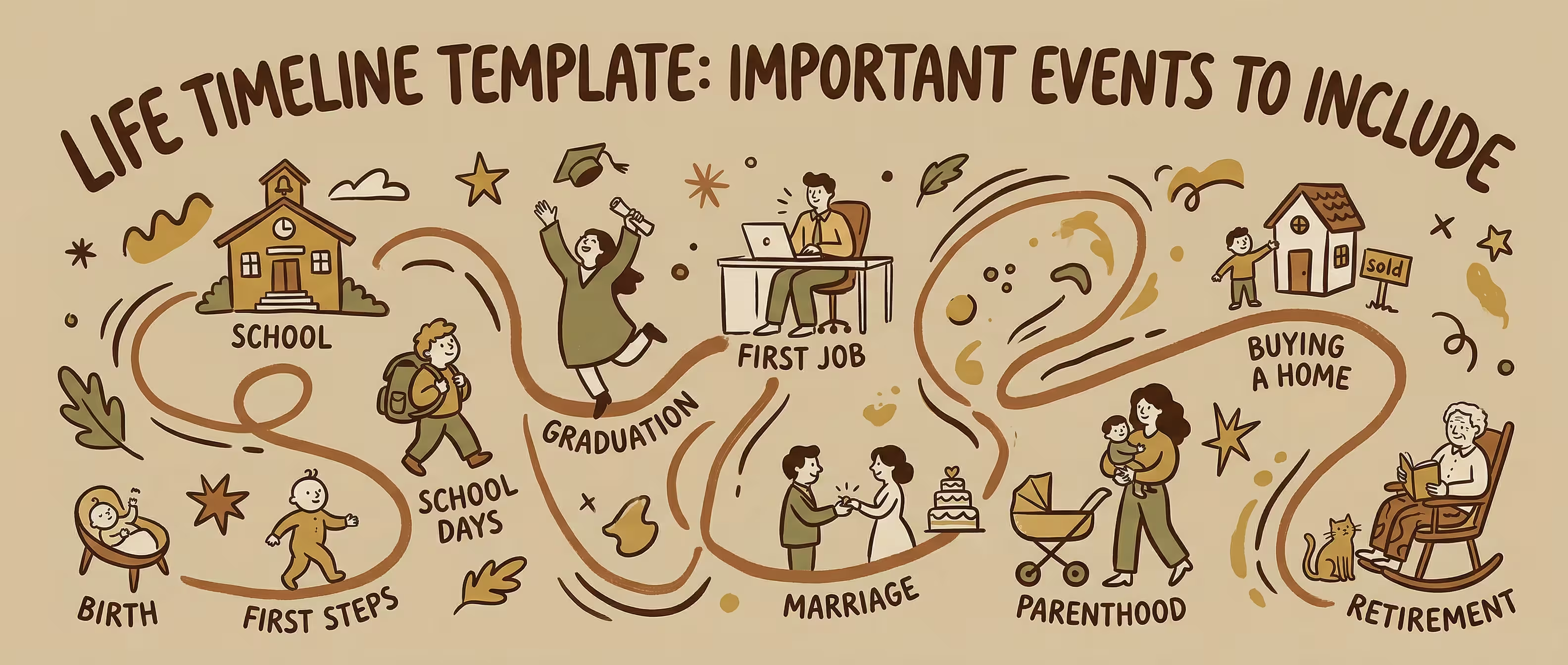
Life Timeline Template: Important Events to Include
Not sure what belongs on your timeline? Here's a template of the life events most people find meaningful when they look back.
Early life: Your birth date and birthplace, family moves during childhood, schools attended, and formative experiences that shaped your view of the world.
Education and career: Graduations, first jobs, career changes, promotions, professional setbacks, and the moments you chose a new direction. These are often the turning points that define entire decades.
Relationships and family: Meeting a partner, weddings, births of children, friendships that changed you, and losses that marked a before and after.
Personal milestones: Travel that broadened your perspective, health challenges you navigated, creative projects, spiritual or philosophical shifts, and moments of personal growth you're proud of.
Historical events: Wars, economic shifts, pandemics, cultural movements, and political changes that affected your life directly. These matter because your story doesn't exist in isolation. Your personal timeline intersects with history, and documenting those intersections makes your story richer and more complete.
Don't aim for completeness on your first pass. A good timeline grows over time. Start with the important events you remember clearly, then fill gaps as memories surface or family members contribute details of their own.
Personal Timeline by Decade
One of the simplest ways to organize a personal timeline is by decade. Breaking your life into ten-year chapters gives each specific period its own identity and makes the whole task feel manageable rather than overwhelming.
For each decade, identify two or three major milestones and a few smaller moments that capture what that period actually felt like. Your twenties might be defined by education and early career, but the detail that brings it alive could be the apartment you shared with friends or the trip that shifted how you saw yourself.
This decade-by-decade approach also works as a template for family projects. Ask parents or grandparents to map their own decades and you'll end up with a living document that spans generations. Each person's timeline adds context to the others. Your mother's twenties explain the world you were born into. Your grandfather's wartime decade puts your own challenges in perspective.
Online Timeline Maker Tools
You don't need coding skills to create a polished life timeline. Several online timeline maker tools offer drag-and-drop interfaces with pre-built design ideas and templates.
Canva is the most popular option. Its timeline templates let you customize colors, font choices, and layouts, then export as a PDF or PNG for printing or sharing. It's a strong choice for anyone who wants a visually appealing result without starting from scratch.
For simpler needs, PowerPoint works fine. Create a horizontal line, add text boxes for dates, and you have a functional visual timeline in minutes.
But if your goal extends beyond a visual representation on a wall, if you want to turn your timeline into something people will actually read, a dedicated storytelling platform does what timeline makers can't. Keepsake lets you organize chapters chronologically, invite family members to contribute, and use the ghostwriter to turn sparse timeline notes into full written prose. It's built for the step that comes after the timeline: the writing itself.
The right tool depends on where you're headed. A timeline maker like Canva produces something you can frame. A writing platform produces something you can hand down.
Turning Your Timeline into Life Stories
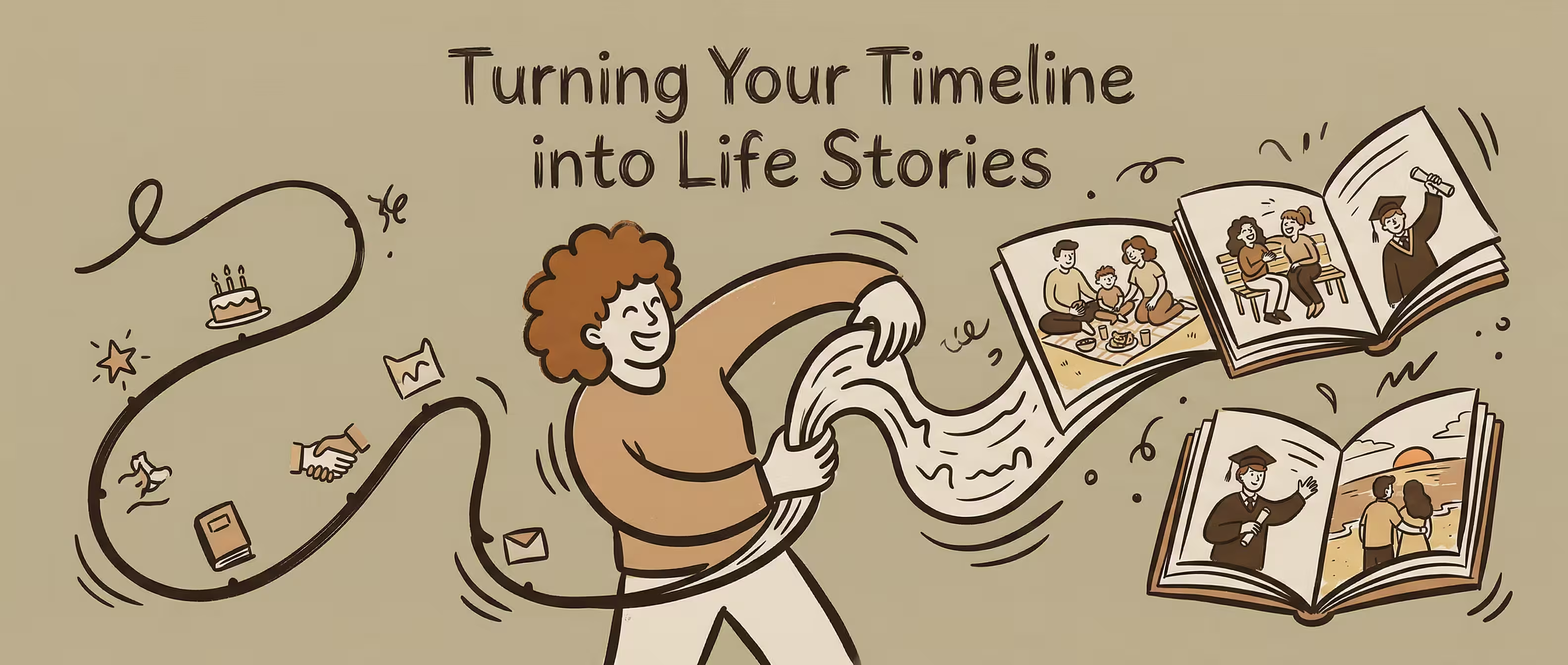
A timeline tells you what happened and when. Life stories tell you what it meant.
Pick three to five entries from your timeline, the ones that still carry emotional weight. Write a paragraph about each. Don't worry about craft yet. Just capture what you remember: the conversation, the weather, the feeling in your chest. These fragments are the seeds of something longer.
If you're working on a family project, interview your relatives about the events on their timelines. Their version of a shared memory will surprise you. A timeline that started as one person's history becomes a layered, collaborative narrative.
If you're ready to go further, our guide to how to write a memoir walks through the full process from timeline to finished draft.
Your past experiences deserve more than a list on a page. They deserve to be written down, shared, and kept. A timeline is where you figure out what happened. Writing is where you discover what it all meant.


