Creating Memory Books for Seniors with Dementia: Digital Tools to Combat Senior Memory Loss
A practical guide to creating memory books for seniors, including those living with dementia. Learn how to preserve life stories, choose the right format, and use digital tools to build a keepsake book the whole family can contribute to.

Keepsake Team
Editorial
Your mother remembers the name of her first-grade teacher but not what she had for breakfast. Your father can describe the exact shade of blue on his childhood bedroom walls but struggles to recall your phone number. Memory works like that, especially as we age. The details closest to the surface aren't always the ones we'd expect.
A memory book captures those details while they're still vivid. It's a place to gather the stories, photos, and fragments of a senior's life before they slip away. For seniors living with dementia or Alzheimer's, it can be a lifeline to identity. For everyone else, it's a way for seniors to share stories with the people who love them, while there's still time.
What Is a Senior Memory Book?
A senior memory book is a structured collection of someone's life stories, photographs, and personal milestones. Think of it as a biography told through the person's own words and the artifacts that shaped them. It might include handwritten recipes, wedding photos, letters from old friends, or stories about the house where they raised their kids.
The key distinction: a senior memory book isn't something you buy pre-filled. It's something you build, usually with the person whose memories fill its pages. That collaboration is what gives it meaning. The best memory books are designed around a specific person, reflecting their interests, their era, and their voice.
More Than a Scrapbook or Photo Album
A scrapbook collects decorative moments. A photo album organizes images chronologically. A memory book does something different. It preserves context. The photo of your grandmother at the kitchen table matters less than the story she tells about what she was cooking, who was visiting, and why that afternoon stuck with her for sixty years.
Where a photo album says "this happened," a memory book says "this is who I was." That distinction matters enormously for seniors, especially those facing cognitive decline. A photo album can feel like looking at a stranger's life. A memory book, built with familiar voices and photos of familiar places, feels like home.
Benefits of Memory Books for Seniors and Their Loved Ones
The practical benefits of memory books are well documented in gerontology research, but the cognitive and emotional rewards are harder to quantify. A memory book gives a senior something concrete to hold and revisit. It tells them: your life mattered. Someone cared enough to write it down.
For seniors and their families, the benefits run just as deep. Adult children often realize they know surprisingly little about their parents' early lives. The process of building a memory book together opens conversations that might never happen otherwise. You learn your father was terrified on his first day of work. You discover your mother almost moved to another country before she met your dad. These aren't trivial details. They reshape how you understand a senior loved one.
Reminiscence and Cognitive Function
Reminiscence therapy is a well-established approach in senior care, and memory books are one of its most effective tools. When seniors revisit familiar stories and images, they activate long-term memory pathways that often remain intact even as short-term recall deteriorates.
Studies in cognitive function among older adults consistently show that structured reminiscence reduces agitation, improves mood, and strengthens communication. A memory book provides the structure. Instead of asking a broad question like "tell me about your childhood," you can open to a page with a photo of their old neighbourhood and ask, "what was the corner shop like?" Specific prompts get specific answers, and those answers exercise the brain in ways that passive entertainment doesn't.
How Memory Books Enhance Memory in Older Adults
The act of recalling and narrating personal stories does more than preserve them. It reinforces them. Older adults who regularly engage with their memory books often show better memory retention over time compared to those who don't. This isn't about reversing decline. It's about memory preservation, slowing the erosion and maintaining connection to personal identity for as long as possible.
Beyond cognitive benefits, there's a social dimension. Seniors who share their memory books with visitors, caregivers, or grandchildren have a reason to engage. The book becomes a conversation starter, a bridge between generations that helps seniors stay connected to the people around them.
Memory Books for Seniors with Dementia
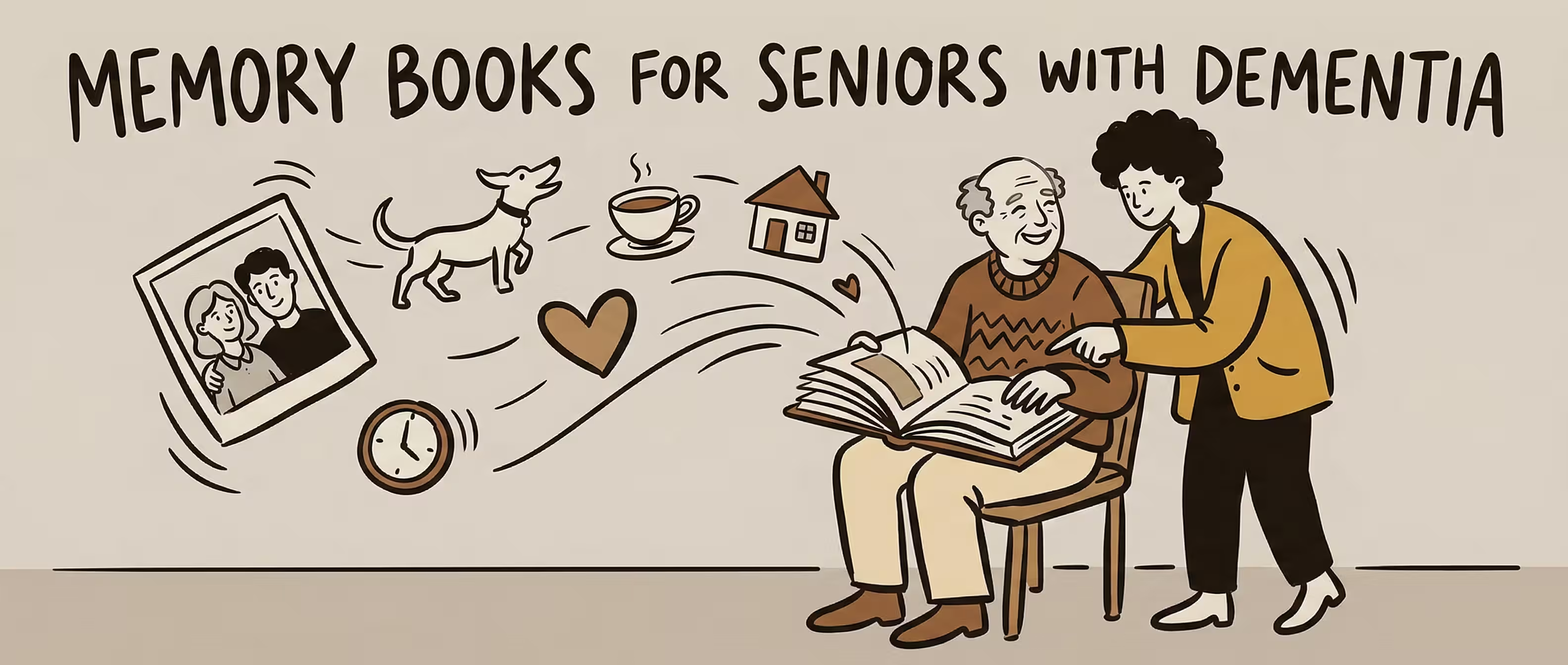
Dementia changes the relationship between a person and their past. Familiar faces become unfamiliar. Routine places lose their context. A memory book for seniors with dementia serves as an anchor, a tangible reminder of who they are when the internal narrative starts to fragment.
This isn't about quizzing someone with dementia on their memories. It's about offering gentle touchpoints. A page with a wedding photo and a few sentences about the day. A favourite recipe in familiar handwriting. A list of the grandchildren's names with their photos. These aren't tests. They're gifts that help seniors reconnect with their cherished memories.
Why Dementia Care Should Include Life Stories
Professional dementia care has shifted significantly in recent years toward person-centred approaches. Life stories sit at the heart of this shift. When a care worker knows that a resident used to be a carpenter, they can hand them a piece of sandpaper during an activity session instead of a colouring page. When they know a resident loved jazz, they can play Coltrane instead of generic background music.
A memory book makes this possible in both memory care facilities and private residences. It translates a person's history into something accessible to anyone involved in their care. It's not just a sentimental object. It's a practical tool that improves the quality of daily interactions for seniors with dementia.
Activities for Seniors Facing Memory Challenges
Building and using a memory book is itself an activity, but the book can also inspire others. Sorting through old photographs becomes a gentle cognitive exercise. Matching photos to stories, identifying people in group shots, placing events in rough chronological order: these are low-pressure activities for seniors that stimulate recall without creating frustration.
For seniors in earlier stages of memory challenges, contributing to their own memory book can be deeply empowering. They might dictate stories while a family member writes, or choose which photos to include. The process gives them agency over their own narrative at a time when much else feels out of their control.
How to Start Creating a Memory Book
The hardest part is starting. Most families stall because they want the book to be perfect, which means they never begin. A better approach: start messy. Gather what you have. A shoebox of photos, a handful of stories you've heard at family dinners, a few documents. You can organize later. The first step is just collecting.
If the senior is able to participate, sit with them. Don't arrive with a formal interview plan. Bring a photo or an object and let the conversation follow. Some of the best material in memory books comes from offhand comments: the aside about a neighbour, the throwaway line about a job they hated, the laugh that follows a story they haven't told in decades. Capturing stories and creating a record of them is what matters most.
Prompts That Bring Back Things from the Past
Good story prompts are specific and sensory. "Tell me about your childhood" is too broad. Try these instead:
- What did your family eat for Sunday dinner?
- What was your first job, and how much did you earn?
- Describe the house you grew up in, room by room.
- What song reminds you of being young?
- Who was your best friend when you were ten, and what did you do together?
- What's something your parents always said?
- What was the scariest moment of your life?
- What smell takes you straight back to childhood?
These prompts work because they target things from the past that are stored in long-term memory and tied to emotion or physical sensation. A question about a smell will unlock more than a question about a date. Work with how memory actually functions, not how we wish it did. You'll be surprised what a single prompt can bring to the surface.
We've compiled 72 interview questions for capturing life stories, from childhood memories to career milestones. They work whether you're sitting with a parent, grandparent, or anyone whose story deserves to be preserved.
Brain Games and Activities to Include
A memory book doesn't have to be all narrative. Mixing in interactive elements keeps it engaging, especially for seniors who tire of reading or listening. Consider including word-association pages, where you list a word and the senior writes or says the first thing that comes to mind. Or "finish the phrase" pages with familiar sayings from their era.
These kinds of brain games serve double duty. They're genuinely enjoyable, and they exercise the senior brain in ways that feel playful rather than clinical. An activity book for seniors that blends storytelling with light cognitive exercises keeps the book feeling alive, something to interact with rather than just read. The goal is to encourage seniors to engage regularly, not just once.
Digital Memory Books vs. Photo Books
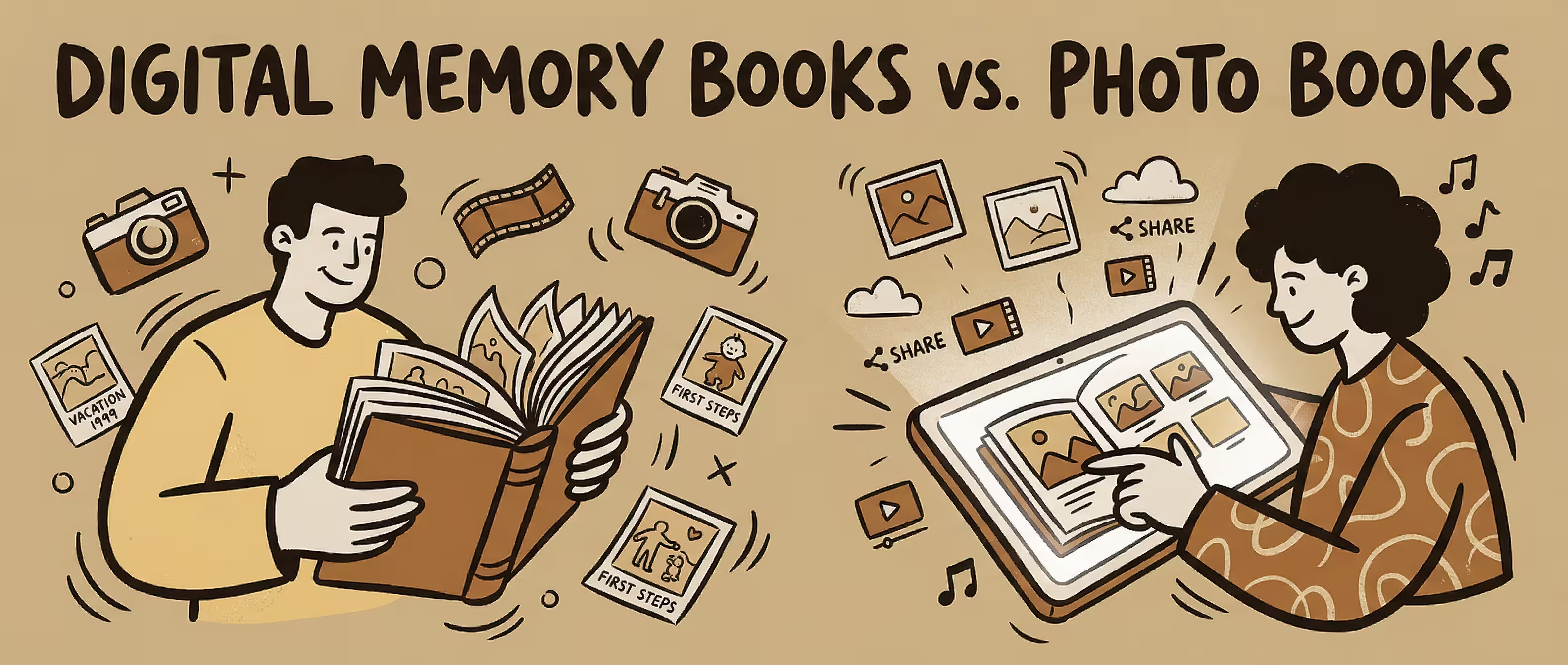
The choice between digital and physical formats depends on who the book is for and how it will be used.
A physical book is tactile. Seniors can hold it, flip through it, keep it on a bedside table. For those with dementia, the physical object is often easier to engage with than a screen. There's no login, no battery, no interface to navigate. A printed photo book sits there, ready whenever someone picks it up.
Digital memory books offer something different: flexibility. Family members in different cities can contribute photos and stories. Updates can be made as new memories surface. Content is easily shared with family members across the country or around the world. And a digital version can always be printed later when it's ready.
Building a Keepsake Book with Digital Tools
Digital tools have made creating memory books dramatically more accessible. Platforms like Keepsake let families create a book of memories collaboratively, with multiple people contributing stories, photos, and prompts from wherever they are. Because the content is digital, it's easily shared with family before printing, allowing them to create something together even across long distances.
The advantage of starting digitally is that nothing is permanent until you want it to be. You can rearrange chapters, add new material as it surfaces, and involve family members who live far away. A grandmother in Brisbane and a granddaughter in London can both contribute to the same keepsake book. When it's ready, print it as a hardcover that lives on the family shelf.
Hardcover, Large Print, and Large Font Options
If the memory book is intended for a senior who will use it regularly, format matters. Large print and large font aren't just accessibility features. They're respect. A book that's easy to navigate and physically comfortable to read gets read. One with tiny text and cluttered layouts ends up on a shelf.
Hardcover binding is worth the investment for a book is designed to be handled frequently. Softcover books wear out. Pages loosen. A hardcover memory book can withstand being picked up every morning, flipped through during a visit, or carried to a care facility. Build it to last as long as the memories inside it.
Personalized Memory Book Ideas
No two lives are the same, and no two memory books should be either. A personalized memory book reflects the specific person it belongs to: their interests, their era, their sense of humour, their values. The most meaningful books cherish what made someone unique rather than following a generic template.
For a senior who loved cooking, build the book around recipes and the stories behind them. For someone who served in the military, organize it around places they were stationed and the people they served alongside. For a grandparent who was the family storyteller, let the book be their greatest hits: the stories everyone in the family already knows by heart, finally written down so they'll survive the teller.
Story Books and Senior Year Journals
Some families create a story book format, where each chapter is a self-contained story from the senior's life. These read almost like a short story collection, and they're particularly good for seniors who were natural storytellers. Each visit, you can read one story together.
A senior year journal takes a different approach, focusing on a single period. Maybe the year they got married. The year they emigrated. The year they started their business. Narrowing the focus often produces richer, more detailed material than trying to cover an entire lifetime. You can always make another volume later.
A Caregiver's Guide to Memory Books
If you're a caregiver, whether a family member or a professional, memory books can transform your daily interactions with the senior in your care. They give you something to talk about beyond the immediate routine. Instead of "did you sleep well?" every morning, you can open the book and ask about the fishing trip on page twelve.
Memory books also help seniors when they become agitated or confused. Familiar images and stories can be grounding. A caregiver who knows the book well can turn to a comforting page quickly, redirecting attention without confrontation.
Using Memory Books in Home Care and Senior Care
In home care settings, a memory book often becomes the centrepiece of the living space. It gives visiting carers an immediate way to connect with the person they're looking after. New care workers can read through it to understand who this person is, not just what medications they take.
In residential senior care facilities, memory books serve a similar role. They help staff see residents as individuals with rich histories. Some facilities now ask families to provide a memory book or life story document as part of the intake process. Among the many care options families can pursue, it's one of the most meaningful, and it costs nothing but time.
Memory Loss and When to Start
The honest answer: start now. Not when memory loss becomes noticeable. Not when a diagnosis arrives. Now, while the stories are still accessible and the person can actively participate in telling them.
If memory loss has already progressed, a memory book is still valuable, but the process looks different. You'll rely more on existing photos, documents, and stories from other family members. The senior may not be able to narrate their own story, but they can still respond to it. Watching someone with advanced memory loss light up at a photo of their childhood dog tells you the book is doing its work.
Keeping the Memory Book Alive
A memory book isn't a one-time project. The best ones grow. New grandchildren get added. Old photos surface during a house move. A cousin sends a letter they found in a drawer. Leave room in the book for these additions, or keep a digital version that can expand over time.
Use the book regularly. Read it together during visits. Let grandchildren flip through it and ask questions. Bring it to care facilities so staff can reference it. A memory book that sits untouched on a shelf is just a book. One that gets picked up, discussed, and added to becomes a living document: a family's collective memory, held together between two covers.
How to Make a Memory Book
Step-by-step guide to building a custom memory book and photo book with your family.
72 Interview Questions for Life Stories
Prompts that unlock the stories your family will want to read for generations.
10 Questions to Ask Grandparents
Start simple with ten questions that open the door to deeper conversations.


