Create a Memorial Photo Book or Memorial Photo Album; Custom Photo Book Styles for Creating a Memorial Book
Most memorial photo books are made by one person. The best ones are made by everyone who knew them. A step-by-step guide to gathering photos, stories, and perspectives into a lasting tribute.


Keepsake Team
Editorial
Most memorial photo books are made by one person. They pick their favourite photos, arrange them on pages, and order a hardcover. The result is always beautiful. It's also always incomplete, because no single person holds every memory of a life.
Photo books capture all kinds of moments in your life. Wedding photo albums preserve a single day. Baby photo books track first steps and birthday cakes. Year-in-review photo books document everyday moments across twelve months. But a memorial photo book serves a different purpose entirely. It's not documenting a moment. It's honouring a whole person.
The photos your brother has from that fishing trip. The ones your mum's friend took at the surprise party in 1997. The shot someone snapped of Dad asleep in the armchair with the cat on his chest. Those are scattered across dozens of phones, shoeboxes, and cloud accounts that nobody's thought to check.
This guide walks through how to make a memorial photo book that gathers all of it: photos, stories, and perspectives from everyone who knew them.
Creating a Memorial Photo Book; Why They Are Never Made Alone
When someone dies, the people who loved them each hold a different piece of the story. Your sister remembers Sunday mornings in the kitchen. His old workmate remembers the practical jokes. The neighbour remembers him standing at the fence every evening, watering the garden and waving at anyone who walked past.
A memorial photo album made by one person captures one perspective. That's not a flaw in the person making it. It's a flaw in the approach. The fullest portrait of a loved one's life comes from gathering those scattered perspectives into one place.
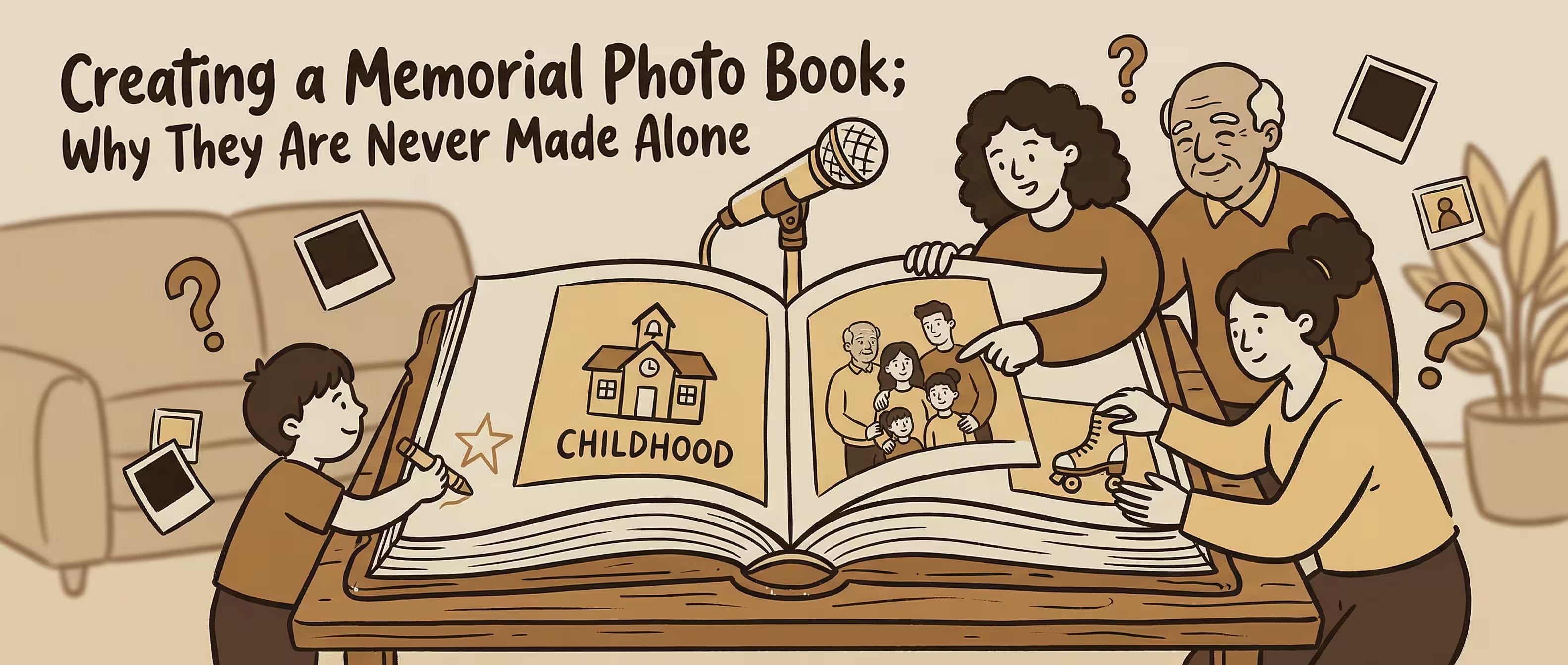
Creating a Memorial Photo Album, Not Just a Photo Album
This is what separates a memorial photo book from a regular photo album. It's not just a collection of images arranged on pages. It's a collaborative act of remembrance, where the process of asking people to contribute is itself a way to grieve, connect, and celebrate a life well lived.
Losing a loved one brings people together in ways that are both painful and necessary. A memorial photo book gives that togetherness a purpose. Instead of "How can I help?" the answer becomes "Tell me your favourite story about them. Send me that photo you took at the camping trip. Write down what you remember about their laugh."
If you're creating a memorial for someone, start by thinking about who else should be involved. Siblings, children, friends from different eras, colleagues, neighbours. Each person carries photos and stories that nobody else has. The more perspectives you gather, the more the book becomes a celebration of life rather than a record of loss.
Planning Your Memorial Book: Structure Before Photos
The temptation is to start collecting photos immediately. Don't. Before you gather a single image, decide how you want to organise the book. Structure gives you a framework for what to ask for and where everything belongs.
Photo Book Design: Choosing Themes That Fit Their Story
There are two common approaches to photo book themes and design:
Chronological: Chapters follow the timeline of a loved one's life. Early years, school, career, family, retirement. This works well when you have photos spanning decades and want to show how someone grew and changed through major life events.
Thematic: Chapters are organised around who they were, not when things happened. One chapter for their sense of humour. Another for their passions. One for the people they loved. This approach works especially well for creating a memorial that captures personality rather than just milestones.
You can blend both. Open chronologically through childhood and early adulthood, then shift to thematic chapters for the qualities that defined them.
Whatever structure you choose, write your chapter titles before you start collecting material. Even rough ones. "Dad at work," "The garden years," "What people said about his cooking." These become prompts you can share with contributors so they know what kind of stories and photos you're looking for.
If the book is for a celebration of life event, you might structure chapters around the best moments people shared with them, giving each contributor a dedicated section. If it's a broader family memorial, a chronological spine with thematic detours tends to work well.
Keepsake's memorial projects come with chapter templates designed for exactly this. They give you a starting framework you can customise based on who the person was and what mattered most about their life. It's easy to create a structure that feels personal rather than generic.
Don't worry about getting the plan perfect. You'll move things around as contributions come in. The point is to have a direction before you have a pile of unsorted photos and stories.
Gathering Photos and Stories From Everyone Who Knew Them to Create a High-Quality Photo Book
This is the hardest part of making a memorial photo book, and the most important. The logistics of collecting from twenty or thirty people can feel overwhelming, especially when everyone involved is grieving.
Create a Memorial Photo Collection From Every Corner of Their Life
The goal isn't just to gather your own photos. It's to create a memorial photo collection that spans every chapter of someone's life, told from every angle. Their childhood friends have photos you've never seen. Their colleagues remember a side of them you might not know. The neighbour has that photo from the street party in 2003.
Here's what works:
Make it as easy as possible to contribute. The biggest barrier isn't willingness. It's friction. If people need to download an app, create an account, or figure out how to email large photo files, most won't follow through. Look for a tool that lets contributors add their photos and stories through a simple shared link, with no account required.
Keepsake's collaboration model works this way. You create a memorial project and share a link. Contributors see the chapter structure and writing prompts, and add their memories directly. No sign-up, no file-size limits, no back-and-forth over email.
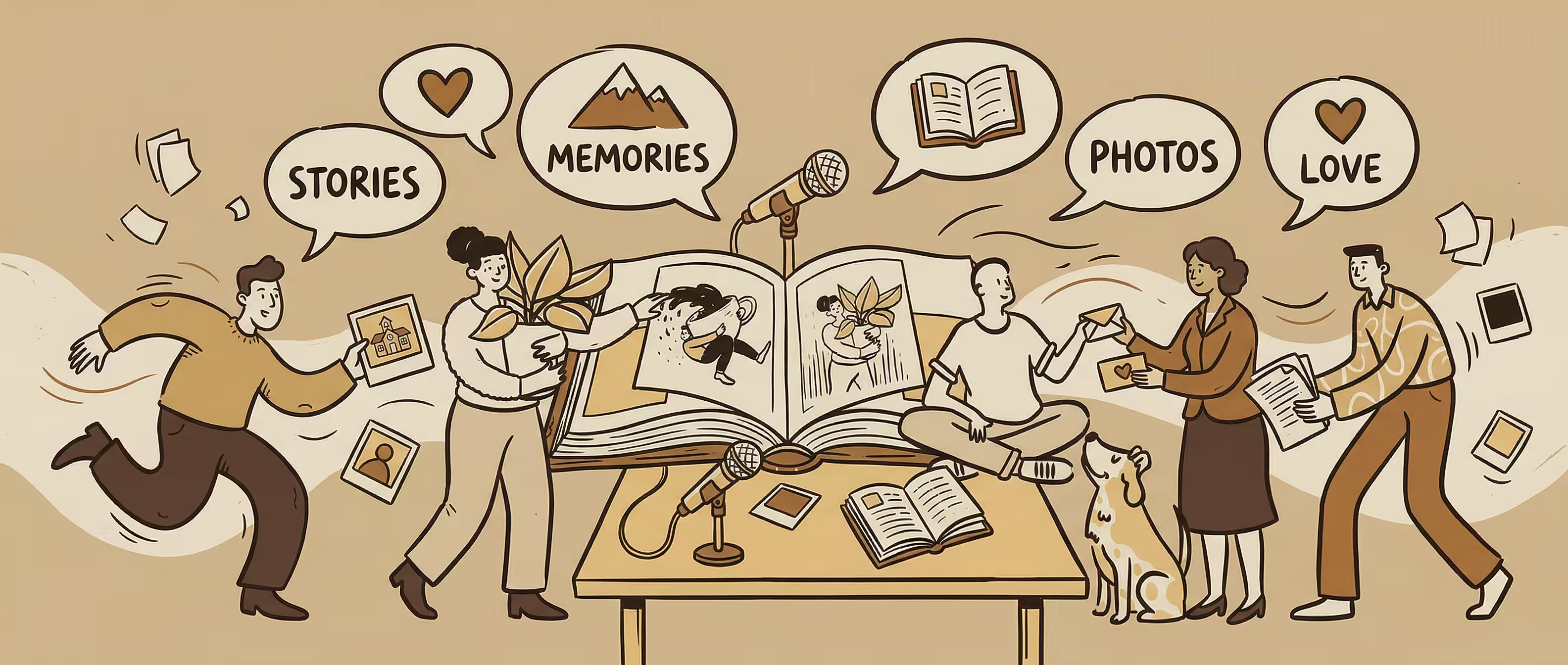
Make a Photo Book Everyone Can Add To
Give people specific prompts, not open-ended requests. "Share your favourite memory of Mum" is too broad. "What's one thing Mum always said that you still hear in your head?" gets somewhere real. Pair photo requests with story prompts: "Send a photo from any holiday with Dad, and tell us what happened that day." For more ideas, see our guide to interview questions for capturing life stories. If you're reaching out to your loved one's close friends in particular, our piece on what to write in a memorial book for a friend gives them a starting point for the stories nobody else in the family can tell.
Be patient with timelines. Grief moves at different speeds. Some people will contribute within hours. Others need weeks or months before they're emotionally ready. Set a soft deadline for the first round of contributions, but leave the door open. Memories surface at their own pace, often when we least expect them.
Accept varied quality. You'll get professional photos alongside blurry phone shots from 2004. A slightly out-of-focus photo of Gran laughing at the dinner table is worth more than a perfectly composed portrait if it captures something true about who she was. You can use free photo editing tools to improve contrast or crop awkward framing, but don't reject contributions because the resolution isn't ideal. Use the photo that tells the truest story, not the one with the highest pixel count.
For tips on scanning old prints and organising digital photos from multiple sources, see our guide to preserving photos.
Organise as you go. As stories and photos come in, sort them into your chapter structure. If something doesn't fit, consider whether your structure needs adjusting. Often the most interesting contributions are the ones you didn't plan for.
Choosing the Right Photo Book Size and Format
The format of your memorial photo book matters more than you might think. This isn't a book that gets read once and shelved. It's something families return to at gatherings, leave on the coffee table, and pull out when they need to feel close to someone who's gone. It should be something you want to revisit, not something that sits in a drawer.
Popular Photo Book Sizes for Memorials
Most memorial books work best in a larger format. A standard photo book might be 8x8 inches, but for a memorial you'll want something closer to 10x10 or 11x8.5. Bigger pages give photos room to breathe and let you feature a single striking image on each page without it feeling cramped. Among the popular photo book sizes for memorials, larger landscape-oriented formats work best as coffee table books that invite people to sit down and look through them.
Layflat binding: This is the single most important format decision for a memorial photo book. A layflat photo book uses a binding that allows the pages to lay completely flat when opened. With traditional binding, photos that span across two pages get lost in the crease. Layflat binding eliminates that entirely. Every photo gets its full display, and the book sits open naturally on a table. A premium layflat option is worth the investment for a book you'll revisit for decades.
Hardcover: For a memorial, hardcover is the default choice. A hardcover photo book feels substantial, handles being passed around at gatherings, and communicates permanence. Softcover has its place for everyday photo albums, but a memorial deserves the durability of a bound book with a solid cover.
Page count: If you're gathering contributions from many people, expect the book to be longer than you initially plan. Thirty contributors might produce enough material for 80 to 120 pages. A memorial book filled with diverse perspectives is better slightly long than ruthlessly edited to the point where contributors' stories get cut.
Best Photo Book Styles for a Lasting Memorial
Among the photo book styles and formats available, the combination of a large-format, hardcover, layflat photo book is the best photo book choice for a memorial. It's the format that gives every photo, story, and memory the space it deserves.
Create a Photo Book Cover That Honours Rather Than Decorates
The cover sets the tone for everything inside. For memorial photo book covers, restraint tends to work better than decoration.
Text-only covers are often the strongest choice for memorials. The person's name, their years, and perhaps a single line: a quote they loved, a phrase the family associates with them, or simply "A Life Well Lived." This approach sidesteps the agonising question of which single photo deserves the cover, and gives the book a dignity that busy designs can't match.
If you use a photo cover, choose an image that captures something essential about who they were, not just what they looked like. A candid shot, a moment of laughter, their hands doing something they loved. Avoid formal portraits unless formality was genuinely part of their character.
Customize Your Memorial Photo Book Cover
Colour and paper choices shape the mood before anyone opens the book. Warm tones like deep greens, navy, and burgundy feel classic and grounded. Lighter palettes in cream, soft grey, or muted blue offer a modern look while remaining respectful. Choose cover and paper combinations that feel like the person, not like a generic sympathy card.
You can create a personalized cover with custom colours and text to match the person's personality. If they were vibrant and colourful, a bright cover honours that. If they were understated, the cover should reflect that too. Personalised memorial photo albums feel most meaningful when the design choices are deliberate rather than default.
Designing Pages People Will Actually Want to Revisit
Good photo book design for a memorial follows one principle: give every element room to be felt.
Don't crowd pages. The instinct is to fit as many photos as possible on each spread. Resist it. White space isn't wasted space. It gives the eye somewhere to rest and makes every photo and story feel intentional. One strong image on a page, paired with a short story, often has more impact than six photos squeezed into a grid.
Mix eras deliberately. Place a childhood photo next to a recent one. Show the same person at five and at seventy-five. These juxtapositions bring a loved one's story to life by showing the full arc of who they became. They remind people that the child in the black-and-white photo became the grandparent everyone knew.
Captions That Carry the Memory Forward
A caption shouldn't just label what's in the photo. "Beach holiday, 1987" tells you nothing you can't already see. "Nana insisted on swimming every morning at 6am, even when it was freezing. This is the only time anyone got photographic proof." That's a caption worth reading. Add text that gives context, emotion, or a detail that makes someone smile.
Attribute contributions. In a collaborative memorial, noting who contributed each story or photo matters. "From his daughter, Sarah" or "Remembered by his colleague, James." These attributions make the book feel like what it is: a collective portrait assembled by many hands.
High-Quality Photo Book Layout Tips
Feature one standout element on each page rather than letting elements compete for attention. Some pages will be photo-heavy. Others might display a single quote in large type, or a story that fills the whole spread. Vary the layout so the book has rhythm, not repetition. The best parts of a memorial book are often the quiet pages: a single photo of their handwriting, or one sentence that captures exactly who they were.
If you're using an online photo book maker like Canva or a platform like Keepsake, look for design templates that give you this flexibility. Rigid grid-based photo book templates can feel limiting for memorial projects. The best ones offer layouts that let you adjust the balance between photos, stories, and white space on every page. Every photo book benefits from thoughtful layout choices, but memorial books demand them.
Creating Your Custom Photo Book Online
Once you've gathered your material and made your format decisions, it's time to build. You don't need design experience to create custom photo books that look professional. Most online photo book platforms handle the technical work for you.
How to Create a Photo Book Online, Step by Step
Start with your strongest material. Open the book with photos and stories that immediately convey who this person was. Don't save the best moments for the middle. First impressions matter, even in a memorial album book.
Work chapter by chapter. If you've followed the structure you planned earlier, you already know roughly what belongs in each section. Lay out one chapter at a time, starting with the material you're most confident about, then filling in gaps.
Personalise each chapter. Use the person's own words where you have them: quotes from letters, texts, birthday cards. These fragments of their actual voice are irreplaceable. Personalised photo books feel alive in a way that photo-only albums don't, and a personalized photo album with their words alongside contributors' memories becomes something genuinely special.
Preview before you print. Every online photo book maker worth using lets you preview before ordering. Go through page by page. Read every caption out loud. Check that the flow from one spread to the next feels natural. Ask a couple of contributors to review it too. Fresh eyes catch things you'll miss after hours of staring at layouts.
Choose quality that matches the occasion. A memorial book deserves premium photo printing on thick, high-quality paper. This isn't the place to cut corners. Look for archival-quality printing, sewn binding, and paper weight that feels substantial. A high-quality photo book holds up to decades of handling.
Create Custom Photo Books With Keepsake

Keepsake makes this process collaborative from start to finish. Rather than one person assembling a book alone from collected photos, everyone contributes directly into the project. The tool makes it easy to organise chapters, arrange content, and order a premium hardcover photo book when you're ready. Keepsake offers a wide range of cover designs, colour palettes, and chapter templates so you can create a photo book or album that genuinely reflects the person it honours. You can also create albums online that stay accessible to all contributors even after the physical book is printed.
A Memorial Photo Book as a Living Object
A memorial photo book is a beautiful way to celebrate the life of someone who mattered. But it's not the end of the process. It's a beginning.
At family gatherings, someone pulls it off the shelf and opens to a random page. A photo sparks a story no one's heard before. "I forgot about that trip." "Look at his face there." The book becomes a catalyst for the conversations that keep someone present in the lives of the people who loved them. It's a way to celebrate and relive your favourite memories of them, together.
If you've built your memorial as a collaborative project, the digital version can keep growing long after the physical book is printed. New photos surface. Someone finds a letter in a drawer. A friend from interstate finally writes their contribution. These additions enrich the memorial over time, and you can always print an updated edition.
A Memorial Album Book Worth Passing Down
Consider ordering multiple copies. Give one to each sibling, each grandchild, each close friend who contributed. A memorial photo album sitting on someone's shelf is a daily, quiet reminder that a life was loved.
Whether you're looking to create a lasting tribute for a parent, a grandparent, a partner, or a friend, the process is the same: gather the people who knew them, give them space to contribute, and turn those collective memories into something you can hold.
Photo books exist for every life event, from wedding day celebrations to everyday moments. But a memorial photo book serves the most important purpose of all: it says this person mattered, and here is the proof, told by the people who knew it firsthand.
Losing a loved one leaves a space nothing fills. But a memorial photo book made together by the people who knew them best offers a meaningful way to commemorate a loved one and keep their story alive for generations. Not a monument. A keepsake.


