Important Life Events for a Teenager: The Teenage Bucket List for Teens to Try
From first jobs to first heartbreaks, the teen years are packed with moments that shape who you become. Here's a field guide to the life events that matter most during adolescence, and why they're worth remembering.

Keepsake Team
Editorial
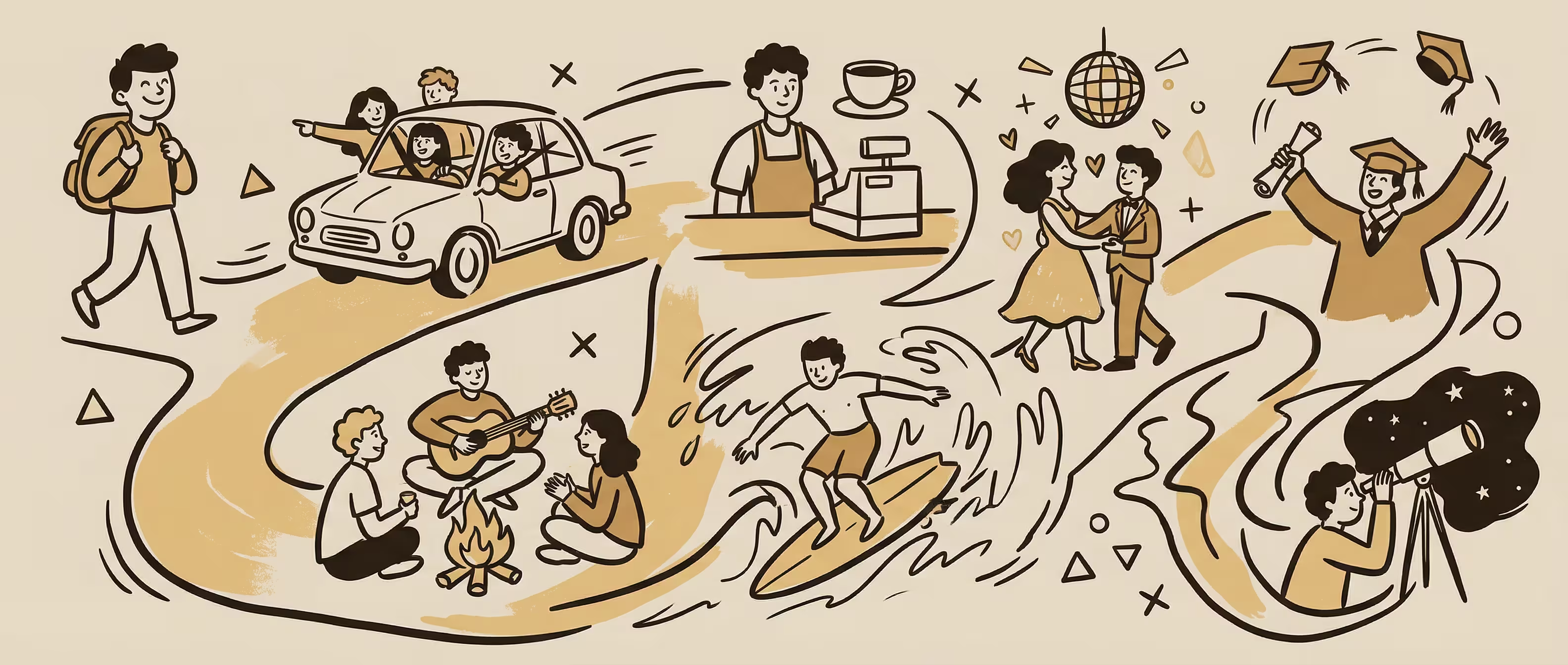
The teenage years are when you collect the experiences that become your stories for decades. Not the polished versions you tell at dinner parties, but the real ones: the first time you drove a car and stalled at every traffic light, the friend who changed how you thought about everything, the summer job that taught you more about yourself than any classroom ever could.
Between puberty and adulthood, there's a compressed window where everything feels enormous because, honestly, it is. Teens crave experiences that feel real, that break from the routine of school and homework and the same four walls. And they should. Adolescence isn't just a waiting room for real life. It's where identity gets built, one unforgettable experience at a time.
This isn't a list of things every teenager must accomplish by 18. It's closer to a field guide for the kinds of experiences that tend to matter most, the ones people look back on and say: "That's when I started becoming who I am."
Firsts Every Teen Will Remember Forever
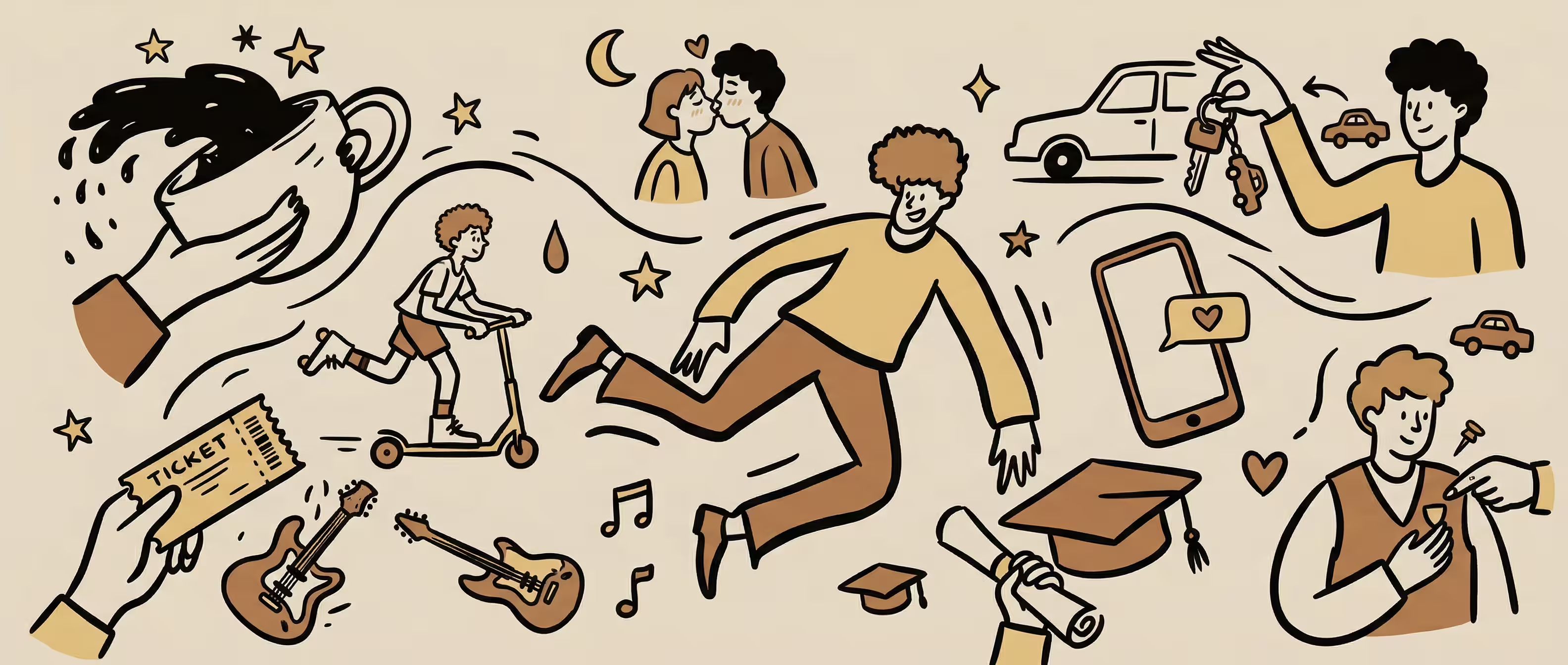
There's a reason people remember their firsts so vividly. First job. First time behind the wheel. First flight without a parent sitting next to you. These moments stick because they're the first time you operated in the world as something closer to an independent person.
A first job, even a terrible one, teaches practical skills no classroom covers: showing up on time for someone who isn't your parent, managing money you actually earned, figuring out how to talk to adults as something approaching an equal. Teens who work part-time during high school often describe it as the experience that made them become responsible, not because the work itself was meaningful, but because someone was counting on them.
First heartbreak belongs on this list too, even though nobody puts it on a bucket list. It's one of life's most disorienting experiences, and going through it as a teen, when emotions are already running at full volume, shapes how you handle vulnerability for years afterward. The same goes for the first real friendship fallout, the kind where you realize not every relationship is permanent and that's OK.
Then there are the quieter firsts. The first time you cook a meal for your family. The first time you travel somewhere and navigate it yourself. The first time someone asks your opinion and actually listens. These don't make the highlight reel, but they build something essential: the sense that you're capable, that you can handle what comes next.
Ask your teen about their firsts. Not just the big obvious ones, but the small quiet ones too. You might be surprised by which moments they consider the most important. These conversations are often where the best family stories begin.
Stepping Outside Your Comfort Zone as a Teenager
The comfort zone is warm and familiar and absolutely useless for growth. Every teenager knows this on some level, which is why teens are drawn to experiences that scare them a little: trying out for the school play, signing up for a sport they've never played, speaking up in class for the first time.
What makes the teenage years such fertile ground for this kind of growth is that the stakes feel enormous but are usually manageable. Bombing an audition at 15 isn't going to derail your life. But the willingness to try, and to survive the failure, builds something you'll rely on forever.
Peer pressure gets a bad reputation, and sometimes it deserves it. But there's a version of peer pressure that works in your favor: when your friends push you to try new things you'd never attempt alone. Signing up for a debate team because your friend did. Going to a party where you don't know anyone. Saying yes to something that makes your stomach flip.
The trick isn't to eliminate fear. It's to help teens understand that discomfort and danger aren't the same thing. Speaking to a crowd is uncomfortable. It's not dangerous. Trying a new activity and being bad at it is uncomfortable. It's not dangerous. Letting teens sit with that discomfort, rather than rescuing them from it, is one of the most valuable things a parent can do.
For teens reading this: the things you're avoiding right now are probably the things you'll be proudest of attempting. You don't have to overcome every fear on your list. Just pick one. Start there.
Why Teens Should Volunteer Before They Graduate
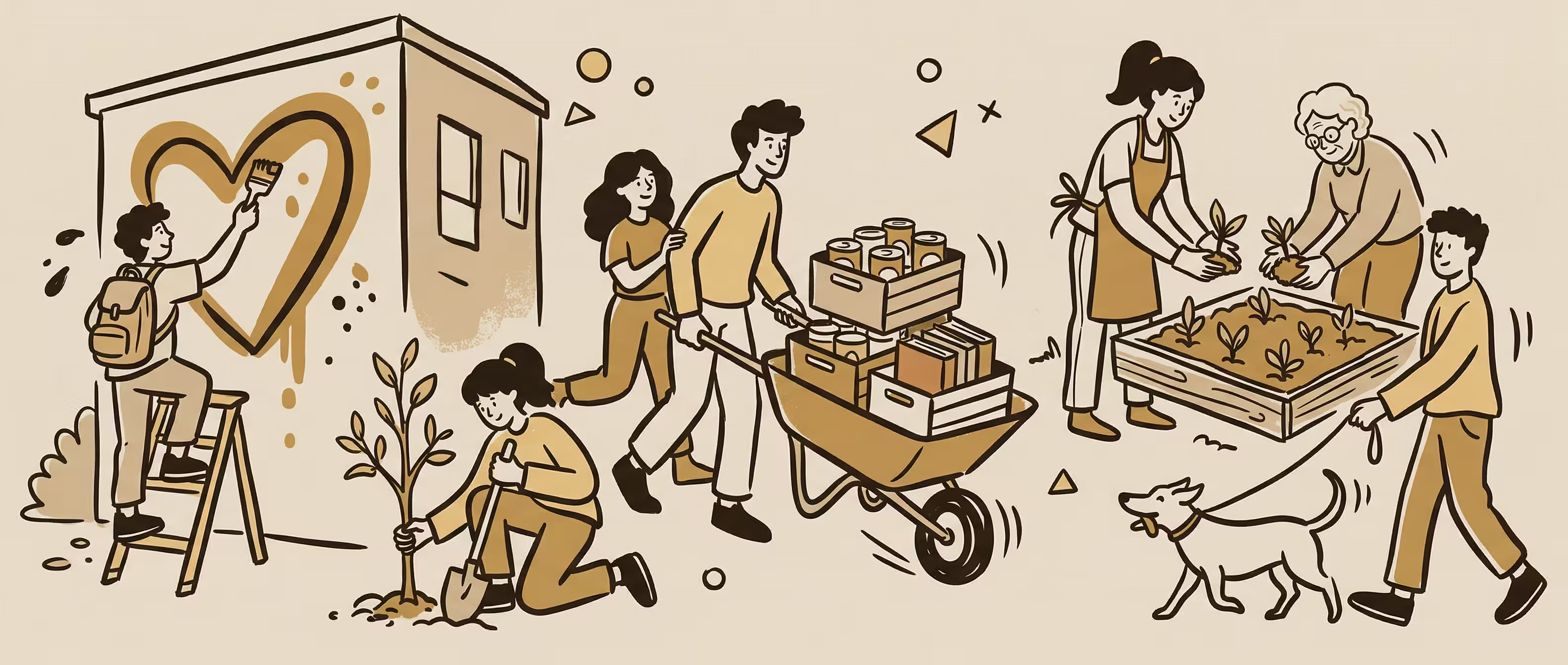
Volunteering as a teen tends to get framed as a resume builder, something for college applications. That framing sells it short. The real value isn't the line on your transcript. It's the shift in perspective that happens when you spend time with people who care about something bigger than grades and social standing.
Working at a food bank, helping at an animal shelter, coaching younger kids at a community center: these experiences put a teenager in rooms they wouldn't otherwise enter. They build teamwork with people outside your usual circle. They introduce you to real-world problems that textbooks only describe in the abstract.
There's also something quietly powerful about being useful. Teens spend most of their time in environments where they're evaluated: graded, ranked, measured. Volunteering flips that. Nobody grades you on how well you sorted canned goods. The point isn't performance. The point is showing up and contributing, and for a lot of teens, that's both a relief and a revelation.
Summer camps that focus on service projects combine the social element with meaningful ways to give back. Some teens discover career interests through volunteer work they never would have found in a classroom. Others simply learn that helping people who need it feels better than most things they spend their screen time on.
If your teen seems disengaged or stuck in a routine that's all school and scrolling, volunteering can crack things open. It introduces a different rhythm, one built around contribution rather than consumption. And the people your teen meets through service, the mentors, the organizers, the other volunteers, often become the kind of people who shape how they see themselves.
Outdoor Activities Worth Adding to Any Teen's Bucket List
There's something about being outside, physically doing something, that resets a teenager's brain in ways that scrolling through a phone simply cannot. Outdoor activities pull teens out of the digital world and into direct contact with their own limits and capabilities.
Hiking a trail that's harder than expected. Camping somewhere without cell service. Learning to surf, ski, or rock climb. Taking a day trip to somewhere you've never been, just to go exploring. These outdoor adventures don't require expensive equipment or elaborate planning, just a willingness to be a little uncomfortable.
Activities like team sports, kayaking, or even a long bike ride with friends create shared experiences that bond people in ways that socializing with friends over text messages never will. There's a reason so many adult friendships trace back to something physical done together as teenagers: a long hike, a camping trip gone sideways, a road trip with terrible music and no air conditioning.
For teens who spend most of their time indoors, the shift can be dramatic. A break from academic pressure, from the routine of assignments and deadlines, does something a screen can't replicate. It's not about becoming an outdoors person. It's about discovering that your body can do more than sit at a desk, and that the world is more interesting when you're moving through it rather than watching it.
Roller coasters count too. So does exploring a new city on foot, visiting an arcade in a town you've never been to, or taking a spontaneous detour on a family road trip. The point isn't wilderness survival. It's breaking the pattern and making your world a little bigger.
Exhibit Who You Really Are
The teenage years are when most people first figure out what they want to say to the world. That impulse to exhibit who you really are, to put something out there and see what comes back, is one of the most important parts of growing up.
For some teens, this means art, music, or creative writing. For others, it's fashion, a YouTube channel, or curating an online presence. The medium matters less than the act itself: taking something internal and making it visible. It's how identity stops being theoretical and becomes something you can point to and say, "That's me."
This is also where sharing things online gets complicated. Teens can reach an audience with unprecedented ease, which opens a world of opportunities for connection and creativity. But it also exposes them to feedback that ranges from supportive to vicious. Learning to put yourself out there authentically, without letting unrealistic standards warp what you're making, is a skill that takes practice and sometimes a few hard lessons.
The hands-on version matters too. Making friendship bracelets for your crew, decorating your room to reflect who you're becoming, learning family recipes and putting your own spin on them, building something tangible with your actual hands. In a world where so much is digital, creating something you can hold carries extra weight.
Parents can help here by respecting their teen's personal space for self-expression, even when it's bewildering. The band poster phase, the all-black wardrobe phase, the poetry-in-a-notebook phase: these are all ways of trying on identity. Some stick. Most don't. All of them matter.
For teens: don't wait for permission to make things. Don't wait until you're good enough. The quality isn't the point right now. The practice of expressing yourself, of deciding what you think and saying it out loud, is what you carry forward into adulthood.
The Journey of Finding Your People
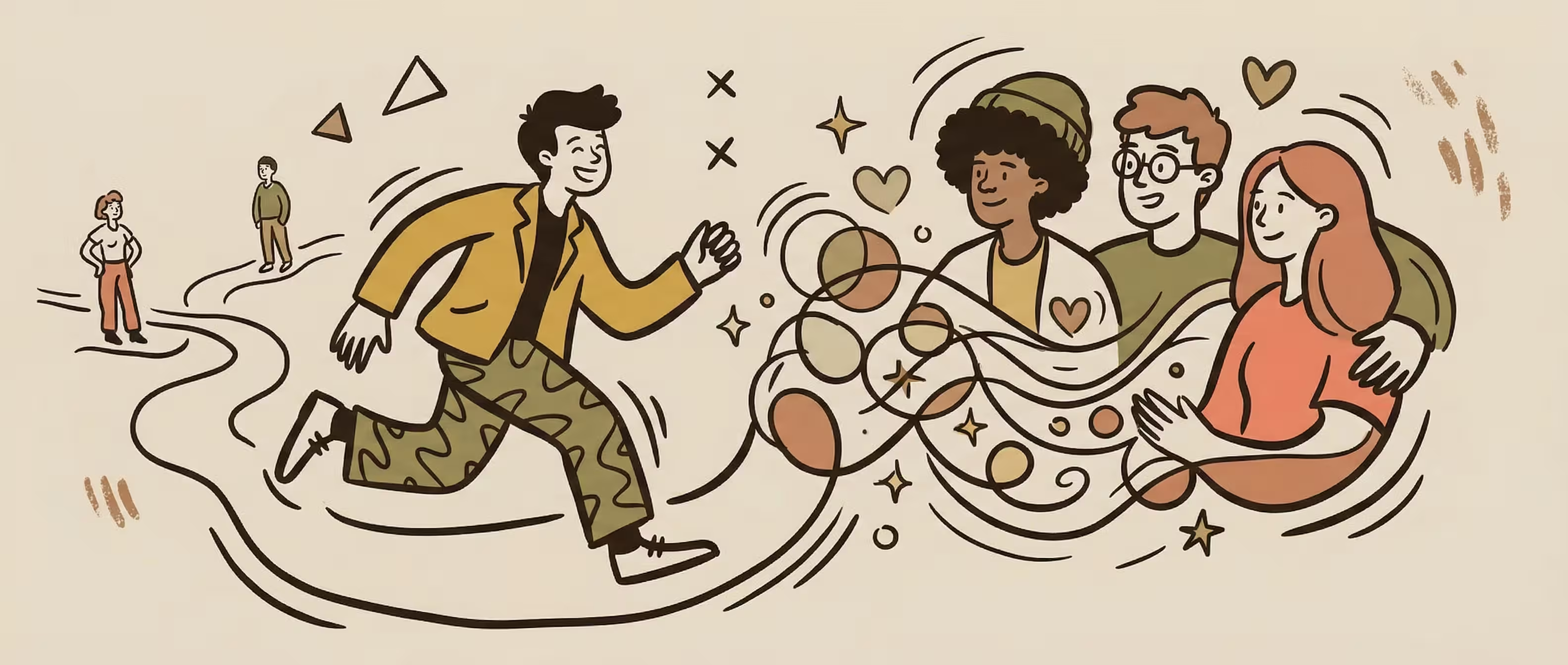
Finding your people is one of the defining journeys of the teen years. Not just making friends, which happens almost by default when you're thrown into school every day, but discovering who you actually connect with when you have a choice.
Some of the most important relationships in a teenager's life form in unexpected places: a summer camp cabin, a volunteer project, the back row of a class you didn't want to take. These friendships feel different from the ones assigned by proximity. They're chosen, and that distinction matters.
The flip side is harder. Part of this journey means outgrowing people, or being outgrown. The friend group that defined middle school might not survive high school, and that's painful. Teens often experience it as a personal failure rather than a natural part of growing up. Open communication, both with friends and with trusted adults, makes these transitions less isolating.
Friendly competition between close friends can actually deepen bonds when it's rooted in mutual respect. Pushing each other to be better, whether in sports, academics, or creative work, is one of the ways teens build trust and learn what loyalty actually looks like in practice.
There's also the experience of finding your people outside your immediate circle. Exploring different cultures through exchange programs, travel, or simply befriending someone with a completely different background expands a teen's understanding of who they can connect with. It's how a teenager's world goes from the size of a school hallway to something much larger.
The friendships that form during these years aren't just nice to have. They shape your sense of self-worth, your expectations for how you should be treated, and your understanding of what it means to show up for someone. They're some of the first relationships where you get to practice being the person you want to be.
Document Your Journey and Create Lasting Memories
Here's something nobody tells you when you're a teenager: the details fade faster than you expect. The inside jokes, the specific feeling of a Friday night with your best friends, the way your room looked at 16. You think you'll remember everything. You won't.
That's why documenting matters, and not just in the polished, curated way social media encourages. Journaling, even sporadically, captures the texture of daily life that photos alone miss. What you were worried about. What made you laugh until you couldn't breathe. What you wanted to be when you grew up, and how that answer changed every six months.
For parents, this is where creating memories becomes about more than just taking photos. Those conversations you have with your teen about their experiences, their firsts, their friendships, and their fears are exactly the kind of stories worth preserving. Keepsake lets families write together, which means a teen's perspective and a parent's perspective can sit side by side in the same project. And when the project becomes a printed book, those stories gain a permanence that a social media post simply can't match.
Encourage your teen to keep things that capture specific moments: ticket stubs, notes from friends, screenshots of conversations that mattered. These aren't just souvenirs. They're anchors for the stories you'll want to tell later.
New skills get forgotten. Passport stamps fade. Even the best summer camps become a blur after enough years. But a story written down, in your own words, at the time it happened? That stays sharp. It's how you explore new chapters of your life without losing the ones that came before.
You don't need a daily journaling habit. Even writing down one story a month, one moment that mattered, adds up. If you're not sure where to start, our guide to documenting family memories can help.
Whether it's a notebook, a voice memo, or a family project on Keepsake, the act of writing your experiences down changes your relationship to them. Downtime becomes reflection. A random Tuesday becomes a scene you can return to. The unforgettable moments stay unforgettable, and the ordinary ones get a chance to reveal why they mattered too.
The teen years don't slow down for anyone. But when you make memories deliberately, when you stop long enough to write something down or tell someone the story, you're doing more than record-keeping. You're telling your future self: this mattered. And that's a gift no amount of scrolling will ever replace.

